

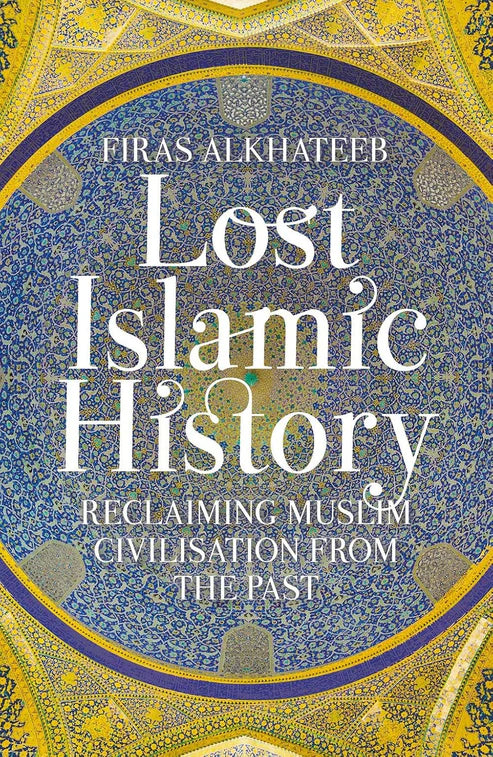
About Lost Islamic History: Reclaiming Muslim Civilisation from the Past by Firas Alkhateeb – A Clear Journey Through Muslim History
History can feel hard when it is spread across many books, names, dates, rulers, places, and wars. Lost Islamic History: Reclaiming Muslim Civilisation from the Past by Firas Alkhateeb brings a very large story into one clear path. It introduces readers to more than a thousand years of Muslim history and shows how faith, learning, politics, culture, science, trade, leadership, and daily life helped shape Muslim civilisation across many parts of the world.
The book starts with the rise of Islam in Arabia and moves through major periods of Muslim history. It looks at important states and empires, including the Umayyads, Abbasids, Ottomans, Muslim Spain, Muslim kingdoms in West Africa, and the Mughal Empire. It also discusses later European colonial rule in Muslim lands and the rise of modern Muslim nation-states. Instead of treating these places as separate stories, Firas Alkhateeb connects them into one long historical journey.
This makes the book especially useful today for readers who want a strong starting point. You do not need to be a history expert before opening it. The writing is made for readers who want the big picture first, so they can understand how people, places, ideas, and events are linked across time.
A Simple Way to Understand a Very Big History
Many readers want to learn Islamic history but do not know where to begin. One book may focus only on early Islam. Another may focus only on the Ottoman Empire. Another may discuss Muslim Spain, India, Africa, or the modern Middle East. Reading all of these separately can make the full story feel broken into small pieces.
Lost Islamic History gives readers a wider view. It places major events in order and shows how one period leads into another. This helps you understand not only what happened, but also where it happened and why it mattered.
The book is especially helpful for people who have heard famous names such as the Umayyads, Abbasids, Ottomans, Mughals, or Al-Andalus but are not fully sure how they fit together. By reading the story in a connected way, you can build a basic timeline in your mind. That simple timeline makes deeper history books easier to read later.
Discover the People and Places Often Left Out of Short History Lessons
One of the strongest parts of this book is its wide geographic view. Muslim history did not happen in only one city, one empire, or one region. Over many centuries, Muslim communities and states developed across the Middle East, North Africa, Europe, Central Asia, South Asia, Southeast Asia, and parts of Africa.
Firas Alkhateeb brings many of these regions into the same story. Readers learn about famous centres of Muslim power, but the book also gives attention to places that are sometimes missing from simple school-level history.
This wider view helps readers understand that Muslim civilisation was diverse. Different peoples spoke different languages, lived under different rulers, built different local cultures, and faced different problems. Yet they were also connected through religion, scholarship, trade, law, travel, learning, and political change.
See How Knowledge, Faith, and Civilisation Grew Together
Lost Islamic History also gives attention to intellectual and cultural life. Muslim civilisation was shaped not only by battles and rulers, but also by scholars, thinkers, scientists, theologians, teachers, builders, merchants, and communities.
The book explains how Islamic belief influenced social life and how Muslim societies supported learning in different periods. Readers can see why major Muslim cities became centres of study, administration, trade, and culture.
This part is useful for anyone who wants to understand the role Muslim thinkers played in fields of knowledge and public life. The book does not treat civilisation as only political power. It shows that ideas, education, science, social systems, and cultural work are also part of history.
From the Early Muslim Community to Great Empires
The story moves from the beginnings of Islam into the growth of Muslim political power. Readers are introduced to the early Muslim community and then to larger states that ruled wide areas.
The Umayyad period shows how Muslim rule spread far beyond Arabia. The Abbasid period opens the door to a world of major cities, scholarship, administration, cultural growth, and political change. Muslim Spain shows how Islamic civilisation developed in Europe. The Ottoman story takes readers into one of the longest-lasting Muslim empires. The Mughal Empire shows another major centre of Muslim power in South Asia.
These parts give readers a clear sense of scale. Muslim history is not one straight story with one ruler after another. It is a network of regions, dynasties, communities, and ideas that sometimes worked together and sometimes competed.
Understand Change, Decline, Colonialism, and the Modern Muslim World
A good history book should not stop at famous golden ages. Lost Islamic History also looks at difficult periods and major changes.
Muslim societies faced internal struggles, changing political systems, military threats, economic shifts, and competition from rising European powers. Over time, many Muslim lands came under European colonial control. These changes affected borders, governments, education, law, trade, and identity.
The book then moves toward the modern period, helping readers see how today’s Muslim-majority countries came out of a much longer historical process.
This is important because modern events can be confusing without historical background. Borders, political systems, regional tensions, and cultural debates often have roots in older events. A basic history gives readers context. It does not answer every question, but it helps them ask better questions.
Easy Enough for Beginners, Useful Enough for Serious Readers
Some history books use very academic language. That can make beginners lose interest. Lost Islamic History is known for giving a broad introduction in a more direct and readable way.
The book is a good match for readers who want knowledge without starting with a very heavy academic text. It can work as a first step before moving to more detailed books about Islamic history, specific dynasties, famous scholars, military history, political thought, or regional studies.
It can also help readers who already know some Islamic history but want to put their knowledge in better order. You may know about the Crusades, the fall of Baghdad, Muslim Spain, the Ottomans, or the Mughals separately. This book helps place those topics on one timeline.
Why This Book Can Stay With You After the Last Page
The value of Lost Islamic History is not only in facts. It can change the way readers see the past.
When history is studied in small pieces, it is easy to think that events happened alone. But history is connected. Trade affects politics. Political change affects learning. War changes borders. New rulers support or weaken institutions. Ideas move between cities. Communities grow, move, and mix.
It can also create interest in further reading. One chapter may make you want to learn more about Baghdad. Another may lead you to Al-Andalus. Another may make you curious about West African Muslim kingdoms, the Ottomans, the Mughals, Islamic scholarship, colonialism, or the formation of modern states.
A Useful Choice for Students, Families, and Self-Learners
Students can read it to build background knowledge before studying a specific time period. Parents can keep it at home as part of a family history collection. Teachers can use its broad timeline to help learners understand where major events belong. University students can use it as a starting point before reading more specialised works.
You do not need to read it like a textbook. You can read a few pages each day, take notes, mark important names, or make your own timeline. You can also use each major section as a starting point for deeper study.
Made for Readers Who Want a Stronger Connection With the Past
Many people know small parts of Muslim history from school, family stories, lectures, documentaries, social media, or religious talks. But short pieces often leave gaps.
This can be especially meaningful for readers who want to understand how Muslim communities changed over time. It shows periods of expansion and learning, but it also includes conflict, decline, outside pressure, colonialism, and modern political change.
A Premium Reading Copy from Bookish Wonderland
A long history book should be comfortable to read and strong enough for repeated use. Bookish Wonderland prepares this printed edition for readers who care about both content and physical quality.
The pages use premium eye-soothing cream paper, which is comfortable for longer reading sessions. The crystal-clear print keeps letters sharp and easy to follow. The high-quality stitched and glue binding is made for better longevity, so the book can stay secure through regular reading, note-taking, study, and shelf storage.
This makes it a practical choice for readers who plan to return to important chapters again and again.
Why Buy Lost Islamic History from Bookish Wonderland?
Bookish Wonderland focuses on readers who want durable English books with good print quality and dependable service.
You can order from inside or outside Dhaka, with nationwide delivery available across Bangladesh. Cash on Delivery is also available for easier purchasing. Readers in Dhaka may also choose a fast or urgent delivery option when available.
Looking for the Lost Islamic History by Firas Alkhateeb Book price in Bangladesh? Bookish Wonderland gives readers a simple way to order this important history title with quality printing, strong binding, and convenient delivery options.
What You Will Gain From Reading This Book
This book can help you build a clear timeline of Muslim history from the rise of Islam to the modern period.
It can help you understand the difference between major dynasties and empires. It can introduce you to important regions beyond the most commonly discussed centres. It can show how political power, faith, learning, science, trade, and culture developed together. It can also give you background for understanding later colonial rule and the formation of modern Muslim states.
You may finish the book with many new questions. That is a good thing. Strong history reading often begins when one book makes you curious enough to open the next one.
A Book for Anyone Who Wants the Bigger Picture
If you have ever wanted to understand how Muslim civilisation grew from its beginnings into a history that reached across continents, Lost Islamic History: Reclaiming Muslim Civilisation from the Past by Firas Alkhateeb is a strong place to begin.
It gives you a broad map before you enter the smaller roads of detailed history. It connects famous empires with less-discussed regions, political events with learning and culture, and the early Muslim world with the modern age.
The book can make names and events that once felt separate begin to fit together. It can help young readers, students, adults, and lifelong learners build a stronger base for future study.
For readers building an Islamic history shelf, this is the kind of book that can sit near the beginning of the journey. Read it first, mark the people and places that interest you, then use those topics to guide your next books.
Order Lost Islamic History: Reclaiming Muslim Civilisation from the Past by Firas Alkhateeb from Bookish Wonderland and add a clear, wide-ranging introduction to Muslim civilisation to your collection.
If you need any customization or have any questions, please inbox us via FB or Insta.
| Primary Specification | |
| Author | Firas Alkhateeb |
| Narrator | Neil Shah |
| Genre | History, Islamic History, Religion & Spirituality |
| ISBN-13/ISSN | 978-1849046893 |
| ISBN-10 | 1849046891 |
| Publisher | Hurst |
| Publishing Date | November 15, 2017 |
| Language | English |
| Reading Age | 14+ years |
| Format | Printed book |
| Physical Specification & Quality | |
| Paper Quality | Premium eye-soothing cream paper |
| Binding Quality | High quality stitched and glue binding (for longevity) |
| Print Quality | Crystal-clear print |
| Pages | 248 pages |
| Country | United Kingdom |
| Logistics Information | |
| Weight | 268 gm |
| Length | 8.5 inches |
| Width | 5.6 inches |
| Height | 0.9 inch |