

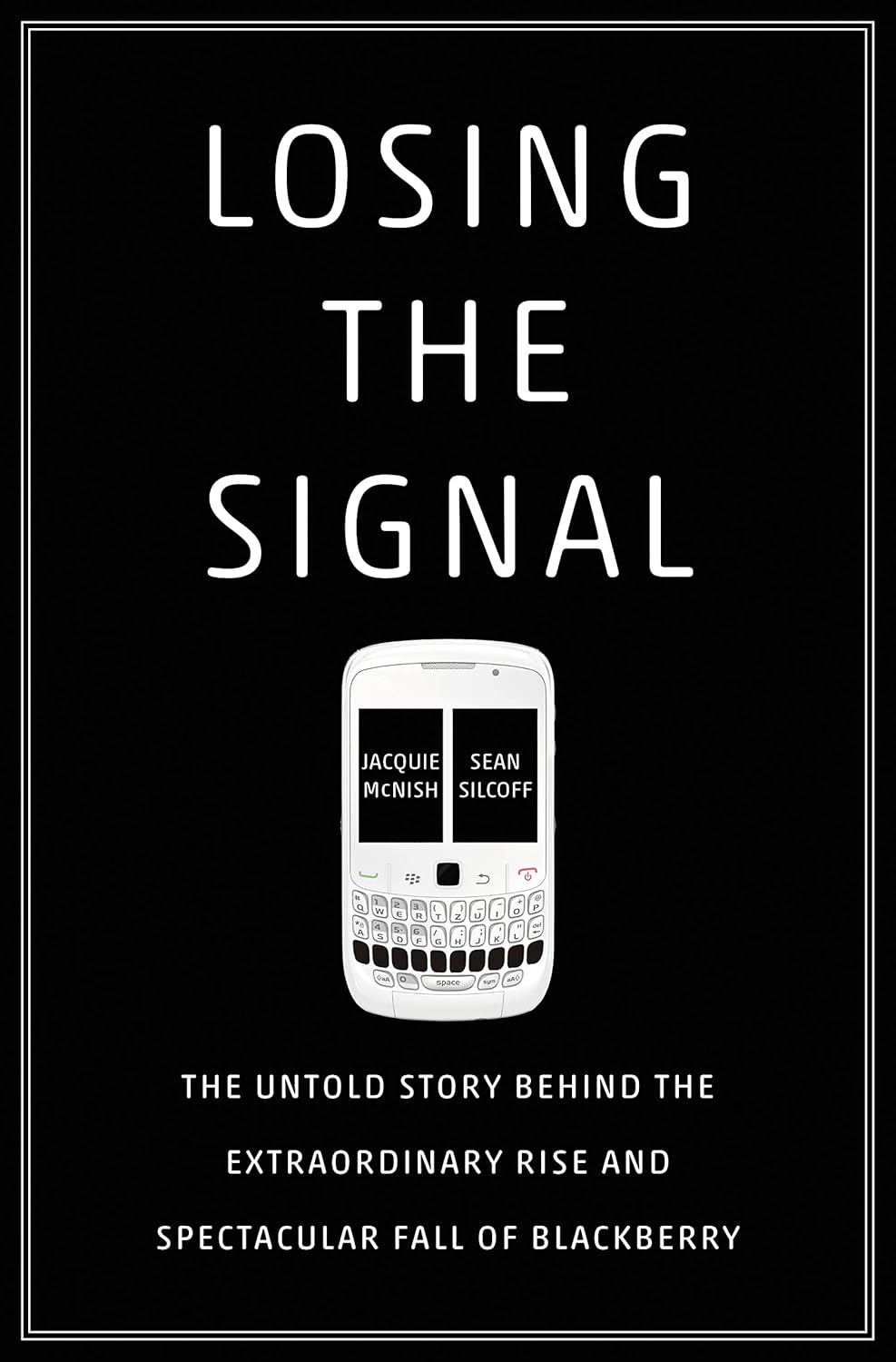
About Losing the Signal by Jacquie McNish and Sean Silcoff: How BlackBerry Rose and Lost Its Lead
BlackBerry once made the phone that many people wanted to carry. Its devices helped people read email away from a desk, send quick messages, and keep work moving wherever they went. For a time, the small keyboard and blinking message light seemed like signs of the future. Then the future changed.
Losing the Signal by Jacquie McNish and Sean Silcoff tells the story of how BlackBerry became a leader in mobile technology and how it struggled when new rivals changed what people wanted from a phone. The book follows the company, its leaders, and the hard choices behind its rise and fall. It is a business story, but you do not need to run a business or know much about technology to follow it. At its heart, it asks a simple question: how can a company that helped shape the future fail to see what comes next?
When being first is not enough
A good idea can change daily life. It can also make a company believe that the way it won before will keep working forever. That is the problem at the centre of this book.
BlackBerry did more than sell phones. It made mobile email useful to people who needed to stay in touch. Its success gave it a strong name and a loyal base of users. Yet success also brought pressure. As the company grew, its leaders had to protect what people already liked while deciding what to build next. Those choices became harder when Apple and Google entered the mobile phone market.
If you have ever wondered why a famous product can lose its place so quickly, Losing the Signal gives you a way to understand it. McNish and Silcoff take readers inside the company’s growth, disagreements, and response to new competition. They show how the trouble was more complex than one missed product or one bad decision. Internal conflict and rapid growth were part of the story, alongside changes in the market.
That makes the book useful even if you have never owned a BlackBerry. It gives a clear example of what can happen when a team is trying to solve today’s problems while tomorrow’s market is taking shape.
The story behind a phone people depended on
Think about how often people now use a phone to work, talk, plan, and find information. BlackBerry helped make the idea of staying connected on the move feel normal. Its rise is one reason its fall still draws interest. This was a company that had already shown the world a new way to communicate. How did that lead become so hard to keep?
McNish and Silcoff tell the story through people as well as products. Readers meet the leaders trying to grow the business and face rivals. Their choices matter because a company does not change direction on its own. People must agree on what the danger is, decide what customers need, and act in time. When they disagree, even a strong company can slow down.
The book also makes room for BlackBerry’s achievement. Its later struggles do not erase the work that made it important in the first place. That balance is part of what makes the story worth reading. You can see why people trusted the devices and why the company had reason to believe in its approach. Then you can watch the market change around that belief.
This is not a guide that promises one easy rule for success. It is a detailed account of a real company facing a difficult change. Readers can draw their own lessons from what its leaders saw, what they debated, and what happened when new phones offered a different experience. The result is a story with enough detail to make the decisions feel real, even for someone who is new to business books.
What you will find inside
- The rise of BlackBerry: Learn how its approach to mobile communication made the company and its phones so influential.
- The people making the decisions: Follow the leaders whose partnership and choices shaped the business.
- The pressure of fast growth: See how success created new problems inside a company that was expanding quickly.
- A changing phone market: Understand the challenge BlackBerry faced as Apple and Google changed expectations for smartphones.
- A lasting business lesson: Consider how a company can respond when the strengths that built its success no longer meet every customer’s need.
The book works well for readers who like a story with a clear beginning, a turning point, and real consequences. You can read it to learn about a major technology company, or you can read it for the human choices behind the headlines. Either way, it gives you more to think about than a simple list of things BlackBerry should have done.
Why this story stays with you
It is easy to look back at an old phone and think its future was obvious. It was less obvious to the people making decisions while BlackBerry was growing. They had a successful product, customers who relied on it, and a business they needed to keep running. At the same time, they faced rivals with different ideas about what a phone should do.
That gap between looking back and making a choice in the moment is one of the book’s most interesting parts. It can change how you think about business stories. A company’s decline may look sudden from the outside, while the people inside it have spent years working through smaller problems and competing plans. Losing the Signal gives those choices context.
For someone building a business, the book can prompt useful questions. What do your customers value now? What might they value later? When does trust in a successful product help you, and when can it make change harder? The book does not answer those questions for your own company. It gives you a real case to think through.
For a reader who simply remembers BlackBerry, it offers another reward: a fuller story behind a familiar name. You may remember the keyboard, the messages, or the sense that everyone important seemed to have one. Here, you can learn more about the work and decisions behind that device. You can also see why the move from one kind of smartphone to another mattered so much.
A good choice for curious readers
Choose this book if you enjoy true stories about businesses, inventions, or people working under pressure. Its subject is technology, but its questions are easy to recognise. How do people share control? How do they handle disagreement? How can they tell when the world around them has changed?
It may suit a student who wants a readable example of business competition. It may suit an entrepreneur thinking about growth and customer needs. It may also suit someone who enjoyed the BlackBerry story on screen and wants to spend more time with the company’s history. The publisher identifies the book as the basis for the film BlackBerry; the book gives readers room to follow the wider business account at their own pace.
You can read a chapter, pause, and think about what you would have done in the same position. That is part of the value of reading this story as a book. There is no need to rush to the outcome. The events and decisions along the way are what make the outcome easier to understand.
Made for time with a printed book
Bookish Wonderland offers a printed copy for readers who want to spend time with the story away from a screen. The premium eye-soothing cream paper is comfortable for longer reading sessions, while crystal-clear print helps keep the text easy to read. High-quality stitched and glue binding is designed to help the book hold together through regular use.
Those details matter for a book you may want to return to. A business student might mark a passage about leadership. A founder might revisit a section after facing a hard product choice. Another reader may simply want to keep a book about a defining change in technology. A durable printed copy makes it easier to pick up the story again when a new question comes to mind.
Bookish Wonderland also carries a large collection of premium English books. If you are choosing Losing the Signal for yourself or as a gift for someone who follows business and technology, you can order it alongside other books that match those interests.
What can you take from BlackBerry’s story?
One reason to read about a company’s fall is to learn what it built well. BlackBerry reached people with a product that answered a real need. Its devices made communication quicker and more useful for many customers. The strength of that idea explains why the company became so widely known. Without understanding its success, its later trouble would mean much less.
The next reason is to see how quickly a customer’s idea of a good product can change. People who once valued one set of features may begin to expect something else. A company then has to decide which parts of its old success to keep and which parts to rethink. That choice is hard when the old product still has users who love it.
The book also invites you to think about how leaders work together. A strong partnership can help a company grow. As the company gets bigger and the market gets more difficult, the same leaders may have different views on what matters most. Reading about those disagreements makes the business story more human. These are people trying to make decisions with limited time and an uncertain future.
None of that means every reader must look for a business lesson on every page. You can enjoy Losing the Signal as the account of a company that rose, faced a major challenge, and struggled to find its next move. The lessons are there when you want to think about them. The story carries you through the decisions first.
Is Losing the Signal part of a series?
Losing the Signal is a standalone nonfiction book. You can read it on its own. The book is credited to Jacquie McNish and Sean Silcoff, and there are no other series books to read before or after it.
That makes it easy to choose if you want one complete account of BlackBerry’s rise and fall. You do not need background reading to begin. Familiarity with BlackBerry may add to your interest, but the story also welcomes readers who know the name and want to understand why it once mattered so much.
A useful read beyond the technology shelf
Business books often speak directly to owners or managers. This one can reach a wider group of readers because its main subject is change. A product can become part of daily life and still lose its place. A team can build something important and still struggle over its next step. Those ideas are relevant wherever people make plans together.
A marketing reader may notice how customer expectations changed. Someone interested in design may think about what people wanted from the devices in their hands. A student may use the story to discuss competition and leadership. Someone who remembers using a BlackBerry may read it simply to understand what was happening behind the product they knew.
The book offers something to talk about after you finish it, too. Was BlackBerry’s position as strong as it looked? At what point should its leaders have changed course? What makes it hard for a successful company to take a threat seriously? People can disagree on the answers, which makes this a thoughtful gift for a reader who likes discussing real events.
It is also a good reminder to look closely at words such as “success” and “failure.” BlackBerry’s success was real: it helped change mobile communication. Its struggles were real as well. Holding both parts of the story together gives a better picture than treating the company as either a perfect example to follow or a mistake to dismiss.
Order Losing the Signal in Bangladesh
If you are looking up Losing the Signal by Jacquie McNish and Sean Silcoff, you may be comparing editions, delivery options, and the Book price in Bangladesh before placing an order. Check the current product listing for the price and availability of the copy you want.
Bookish Wonderland delivers inside and outside Dhaka, with nationwide delivery across Bangladesh. Cash on Delivery is available, and customers in Dhaka can ask about a fast or urgent delivery option. These choices make it easier to order a printed English book in the way that suits you.
For a reader interested in the story behind BlackBerry, this book is a chance to see more than the final result. It follows an influential company while the people inside it try to protect what they built and work out what should come next. Get your copy from Bookish Wonderland and discover the decisions behind one of technology’s best-known business stories.
If you require any customization or have any questions, please inbox us via FB or Insta.
| Primary Specification | |
| Author | Jacquie McNish and Sean Silcoff |
| Narrator | William Hughes |
| Editor | Anna Gorovoy |
| Genre | Nonfiction; Business & Economics; Corporate & Business History; Technology / Computers & Information Technology |
| ISBN-13/ISSN | 978-1250096067 |
| ISBN-10 | 1250096065 |
| Publisher | Flatiron Books |
| Publishing Date | May 3, 2016 |
| Language | English |
| Reading Age | 18+ years |
| Format | Printed book |
| Physical Specification & Quality | |
| Paper Quality | Premium eye-soothing cream paper |
| Binding Quality | High quality stitched and glue binding (for longevity) |
| Print Quality | Crystal-clear print |
| Pages | 288 pages |
| Country | United States |
| Logistics Information | |
| Weight | 305 gm |
| Length | 8.5 inches |
| Width | 5.6 inches |
| Height | 0.72 inch |