

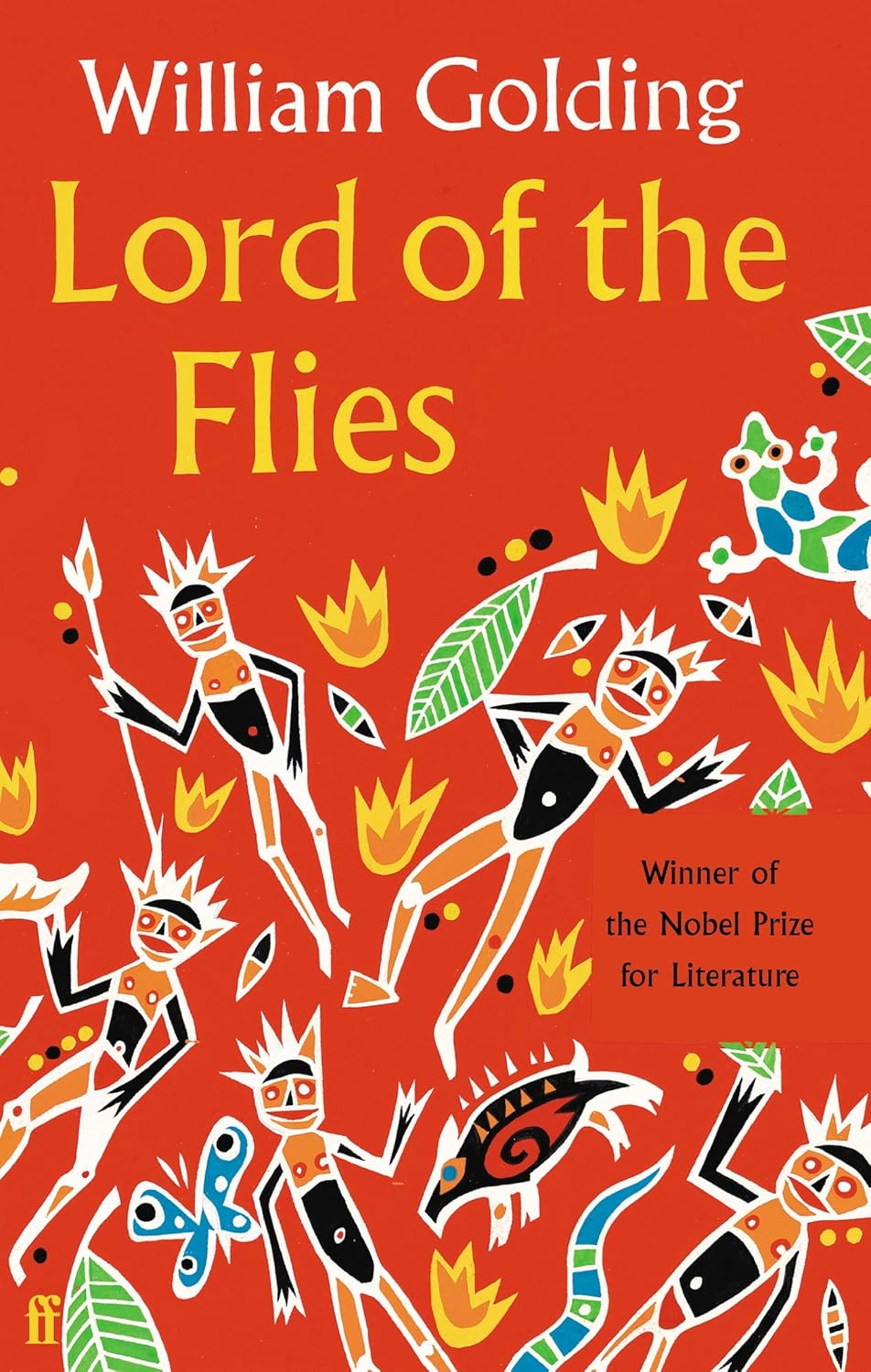
About Lord of the Flies by William Golding: A Story About Fear, Power, and Survival
A group of schoolboys lands on an island with no adults to guide them. At first, it seems like a place where they can make their own rules and wait to be rescued. They have a beach, trees, food to find, and each other for company. But living together is harder than they expect. Some boys want to build shelters and keep a signal fire burning. Others would rather hunt, play, and follow whoever seems strongest. As their fear grows, their plans begin to fall apart.
Lord of the Flies by William Golding is a novel about what happens when a group needs to make choices without anyone there to enforce the rules. It tells a tense story, but its questions are easy to understand: Who gets to lead? Why do people stop listening? What happens when fear becomes more powerful than reason? If you want a book that gives you both a story to follow and ideas to think about afterward, this is a strong choice.
What Happens on the Island?
After a plane crash, a group of British schoolboys finds itself alone on a remote island. They do not know when help will come. Ralph wants the boys to work together, stay organised, and keep a fire going so passing ships might see its smoke. Piggy offers careful ideas, even when the others do not want to hear them. Jack is drawn to hunting and begins to challenge Ralph’s leadership.
The boys have to deal with real needs. They need shelter, food, and a way to call for help. They also hear talk of a beast on the island. No one is sure what it is, yet the fear of it changes how they act. Meetings become harder to control. Jobs are left undone. Boys who once stood together begin to choose sides.
Golding lets these changes happen step by step. You can see why a boy might miss a task or follow a more exciting leader. You can also see the harm those choices cause when everyone makes them. That is what makes the story so hard to put down: you want to know whether the boys will find a way to work together before their fear takes over.
A Classic That Is Easier to Connect With Than You May Think
Some readers see the word “classic” and expect a slow book that feels far away from daily life. Lord of the Flies asks questions that are still familiar. A group makes a rule, then someone decides it does not apply to them. A person with a good idea is ignored because others do not like him. A frightening rumour spreads before anyone checks whether it is true. You do not need to know literary terms to understand why these moments matter.
The island gives the boys space to do almost anything they want. That freedom sounds good until they must agree on what to do next. Should they spend time looking for food or keeping the fire alive? Should a leader give everyone a voice or simply tell them what to do? Can the boys trust what they think they have seen? Each choice has a cost, and Golding makes those costs part of the story.
You can read the novel for its plot alone. You can also pause to think about the decisions each character makes. The book rewards both kinds of reading, which is one reason people return to it after they already know what happens.
Why the Signal Fire Matters
For Ralph, the signal fire is a way to get home. If the boys keep it burning, someone at sea might notice them. Keeping it alive takes work, though, and the result is never certain. Hunting gives the boys something they can see and enjoy right away. The choice between those tasks shows how hard it can be to keep working toward a goal when something more exciting is close at hand.
The fire also helps you follow the group’s changing priorities. When the boys care about rescue, they have a reason to plan and share jobs. When they lose interest in the fire, they lose more than smoke in the sky. They begin to forget what they agreed to do together. It is a clear detail in the story, yet it opens a much bigger question: what keeps a group moving toward the same goal?
Ralph, Piggy, Jack, and Simon
The main characters give you different ways to understand life on the island. Ralph tries to lead through meetings and shared rules. He wants the boys to have a voice, but he learns that making a plan is much easier than getting everyone to follow it. His struggle is easy to recognise if you have ever worked with a group that agreed to help and then stopped doing its part.
Piggy pays close attention to practical problems. He thinks about what the boys need and what might happen if they ignore their work. His ideas often make sense, but the other boys mock him. Through Piggy, the novel asks whether people listen to a useful idea when they dislike the person who says it.
Jack wants to hunt and gain control. He knows how to draw other boys toward him, especially when they are excited or afraid. Simon is quieter and spends more time apart from the group. He notices things others miss. You do not have to like every character to see why they act as they do. Their different wishes push the story forward and make each change in the group feel important.
The Fear of the Beast
The boys’ talk about a beast starts as a question: is something dangerous living on the island? Their fear soon becomes a problem of its own. They listen to rumours, watch one another react, and begin to treat what they imagine as if it must be true. The more frightened they become, the harder it is for them to stop and think.
Golding keeps this part of the story close to the boys’ experience. A sound in the dark or an unfamiliar shape can feel very different when you are alone and waiting for help. Readers can understand why the boys are scared while still seeing how fear leads them toward poor choices.
This is one of the most useful parts of the novel to talk about with another reader. You can ask what the boys know, what they only believe, and who gains power when they are afraid. Those questions also help explain why Lord of the Flies remains a common choice for reading groups and class discussions.
What Does the Conch Mean?
Early in the story, the boys use a conch shell to call meetings. It helps them gather in one place and gives them a simple rule for taking turns to speak. A shell cannot make anyone listen, of course. The boys must choose to respect the rule for it to work.
As their group changes, the way they treat the conch changes too. This makes it a useful detail to watch while you read. It shows the difference between having a rule and believing that everyone should follow it. When someone stops caring about the shell, they are also showing how little they care about hearing another person speak.
You can enjoy the book without looking for symbols on every page. Still, details such as the conch and the fire give you clear things to return to if you want to think more deeply about the story.
A Short Story With Questions That Stay With You
Lord of the Flies does not need a long journey or a large world to hold your attention. The boys are on one island, and many of their problems are easy to name. They need to stay safe, find food, and get rescued. Yet every problem becomes harder when they disagree about who to trust and what matters most.
The novel is also darker than a simple island adventure. The boys can be cruel, and the story includes violence. It is best for readers who are comfortable with serious subjects. Golding does not ask you to admire what happens. He asks you to watch how the boys reach that point and consider what they might have done differently.
When you finish, you may find yourself thinking back to a small choice near the start: a missed duty, a boy left out, or a warning no one wanted to hear. That makes the book useful for readers who enjoy talking about a story after the last page, as well as those studying its characters and themes.
Why Choose a Printed Copy?
This is a book many readers want to mark, revisit, or lend to someone else. You might turn back to an early meeting after reading a later scene. You might want to compare what Ralph says at the start with what he faces near the end. A printed copy makes it simple to move between those moments and keep track of your thoughts as you read.
At Bookish Wonderland, this printed edition is offered with premium eye-soothing cream paper and crystal-clear print for comfortable reading. Its high-quality stitched and glue binding is made for longevity, which is useful for a book you may read more than once. Those physical details matter when a story invites you to return to a scene and notice something new.
Whether you are reading for yourself, preparing for class, or choosing a gift, check the edition details before ordering so you know which copy you will receive. Golding’s novel has appeared in different printed editions, including school editions, so the cover and added material can vary.
Who Will Enjoy This Book?
Choose Lord of the Flies if you like stories about survival where the people are as important as the setting. There is an island to explore and a rescue to hope for, but the hardest challenges come from the boys’ own decisions. Their changing friendships and rivalries give the story its tension.
It is also a good pick if you want to start reading classic fiction and prefer a clear central story. You can follow what happens first, then think about its wider meaning when you are ready. Readers interested in leadership, group behaviour, fear, or the way rules work will find plenty to discuss without needing to study every page like an exam text.
If you are buying it for a student, remember that the book’s serious events may need discussion. Asking what each boy wanted, what he knew, and how he treated the others can open a useful conversation. The novel gives readers room to disagree, which is part of why it works so well for shared reading.
Is Lord of the Flies Part of a Series?
No. Lord of the Flies is a standalone novel by William Golding. You can begin it without reading another book, and its story is contained in this volume. There is no series order to check and no next book you need to buy to understand what happens.
Golding wrote other novels, but they are separate works. If this is your first book by him, Lord of the Flies gives you a complete story and a clear introduction to the kinds of questions he explores. Because it is standalone, it is also an easy choice when you want one thoughtful book for a reading group or a gift.
Order Lord of the Flies from Bookish Wonderland
If you are comparing Book price in Bangladesh, look at the listed price alongside the edition and its physical quality. A copy you can read comfortably and return to later can be a good fit for this story. Bookish Wonderland offers a large collection of premium, durable English books, so you can choose this novel with your reading needs in mind.
Delivery is available inside and outside Dhaka, with nationwide delivery across Bangladesh. Cash on Delivery is available, and readers in Dhaka can ask about a fast or urgent delivery option. If you need the book for a class or a planned reading date, check the available delivery time before placing your order.
Lord of the Flies starts with boys trying to get home and becomes a story about how they treat one another while they wait. If that question makes you curious, order your copy of Lord of the Flies by William Golding from Bookish Wonderland today.
If you require any customization or have any questions, please inbox us via FB or Insta.
| Primary Specification | |
| Author | William Golding |
| Narrator | William Golding |
| Genre | Classic Literary Fiction, Allegorical Fiction, Psychological Fiction |
| ISBN-13/ISSN | 978-0571056866 |
| ISBN-10 | 0571056865 |
| Publisher | Faber & Faber |
| Publishing Date | July 15, 2004 |
| Edition | International |
| Language | English |
| Reading Age | 12+ years, |
| Format | Printed book |
| Physical Specification & Quality | |
| Paper Quality | Premium eye-soothing cream paper |
| Binding Quality | High quality stitched and glue binding (for longevity) |
| Print Quality | Crystal-clear print |
| Pages | 304 pages |
| Country | United Kingdom |
| Logistics Information | |
| Weight | 325 gm |
| Length | 8.5 inches |
| Width | 5.6 inches |
| Height | 0.71 inch |