

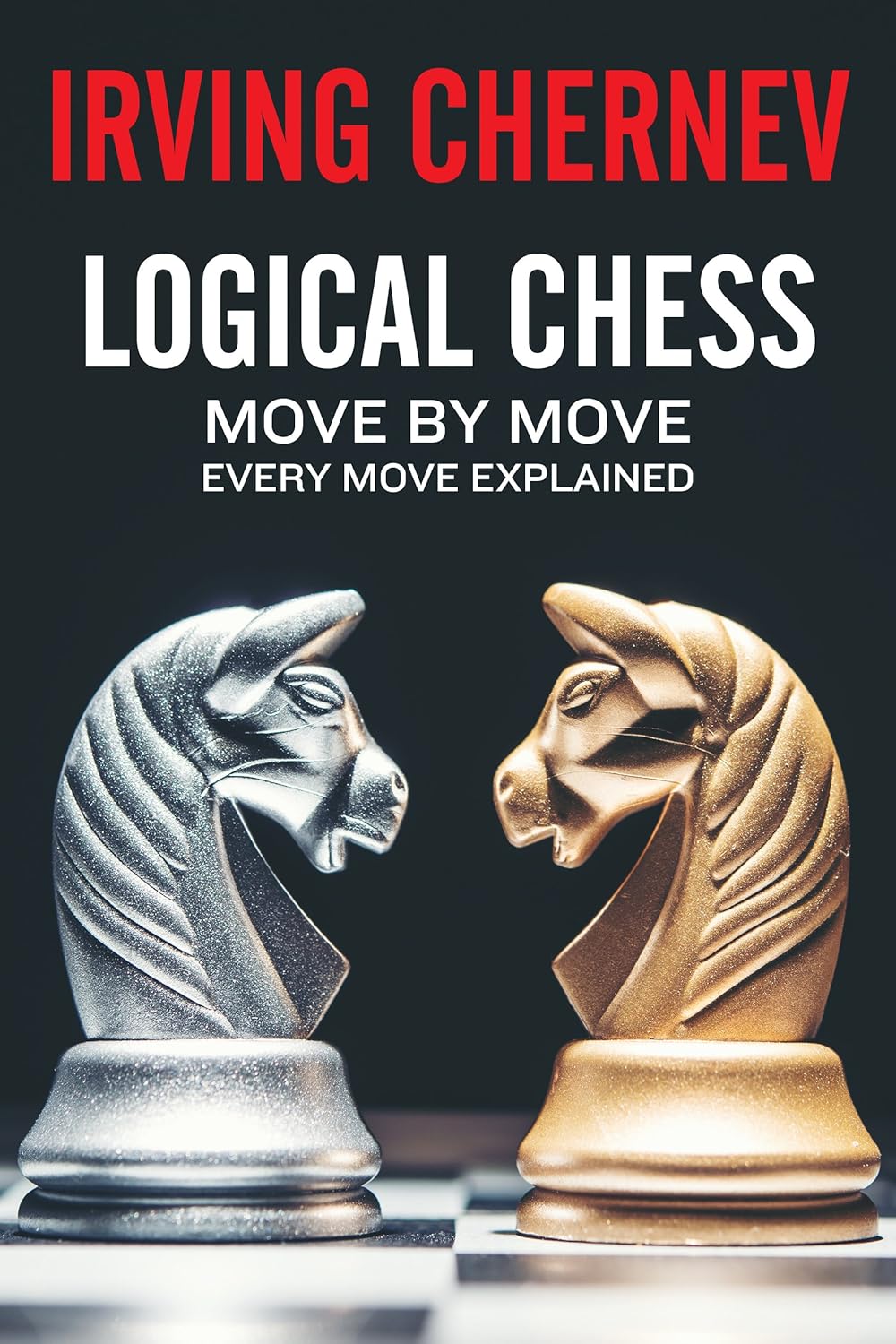
About Logical Chess, Move by Move by Irving Chernev: Learn to See the Reason Behind Every Move
You know how the chess pieces move. But when it is your turn, a harder question comes up: Which move should I make, and why? Logical Chess, Move by Move by Irving Chernev helps you work through that question. Chernev takes you through 33 complete games and explains the thinking behind the moves, from the opening to the end. You can see how players bring their pieces into play, protect their king, make a plan, and respond when the board changes.
This is a book to read slowly, with a chessboard beside you. Set up a position, choose the move you would play, and then read Chernev’s explanation. Even when you choose a different move, you learn something useful: what you noticed, what you missed, and what the player in the game was trying to do. That makes each game a chance to practise thinking, not just a list of moves to remember.
Make Sense of the Moves You Play
Many new players learn an opening, then feel lost a few moves later. They may know where the knights usually go, but they do not know what to do when an opponent makes an unexpected move. Other players solve chess puzzles yet struggle to spot good moves in a full game. A puzzle tells you there is an answer to find. A real game gives you no such hint.
Chernev’s approach helps bridge that gap. As you follow a whole game, you see how one move changes the choices available on the next turn. You learn to ask simple questions: Is a piece under attack? Can I bring another piece into play? Is my king safe? What does my opponent want? The book gives these questions a place in real games, so they become easier to remember when you play your own.
You do not need to understand every idea on your first reading. If a move surprises you, pause there. Look at the board before reading on. Try another move and see what might happen. Then return to the game. The value is in taking time to think, even when the answer is not clear at once.
Follow a Whole Game, One Decision at a Time
Logical Chess, Move by Move is built around 33 complete games. Chernev explains the reasons for the moves throughout each game, including moves that may look simple at first. That steady pace lets you see how a plan begins and how it can change.
The opening is more than a set of moves to copy. It is where players start to make room for their pieces and prepare for what comes next. The middle of the game brings new choices: which piece needs help, which area of the board matters, and whether an attack is ready. Later moves show the result of earlier choices. Following all three parts together can help you understand why a good move at one point may be a poor move in a different position.
Chernev writes for readers who want an explanation as they go. Instead of showing only the most striking moment of a game, he stays with the decisions that lead to it. A quiet move can be useful because it makes a piece stronger or takes away an opponent’s choice. Once you begin to look for those small changes, the board can feel less confusing.
What You Will Find in the Book
- 33 complete games: Follow each game from its first moves through to its finish, with Chernev’s explanations along the way.
- Reasons behind the moves: Read what a player is trying to achieve, then compare that idea with your own choice.
- Ideas you can look for in your games: Pay attention to active pieces, king safety, threats, and the need to answer your opponent’s plan.
- A way to study at your own pace: Read one game at a time, stop at a position, or return to a move you did not understand.
- A book you can use more than once: A game that seems straightforward today may show you a new detail after you have played more chess.
The book works best when you take part. Moving the pieces on a board helps you see each new position. If you prefer to read first, you can do that too, then replay a game later. There is no need to rush through all 33. Spending time with one game and understanding a few decisions can be more useful than finishing several without stopping to think.
A Good Place to Start After Learning the Rules
This book is a strong choice if you already know how the pieces move and want help deciding what to do with them. It can also suit someone returning to chess after a break. You can start with a complete game and let the explanations guide you back into the habit of looking at the whole board.
If you are buying for a young player, it helps if they already know the rules and are comfortable following written chess moves. A parent, teacher, or chess club partner can read alongside them. One person can choose a move before the other reads Chernev’s note aloud. That turns a quiet study session into a useful discussion: Why did you choose that move? What changed after the other player replied?
For an adult beginner, the same method works well alone. You do not need to judge every move perfectly. Your task is to notice what you see, make a choice, and compare your reason with the explanation. With practice, you may start spotting threats and useful squares earlier in your own games.
See More Than the Next Capture
It is easy to focus on a piece you can take. Sometimes that is the right move. At other times, another move helps more: it may bring a piece into play, protect an important square, or stop your opponent’s plan. Complete games give you room to see how these choices affect what happens later.
As you study, you can begin to ask what every move is doing. Does it attack something? Does it defend something? Does it make the next move easier? If the other player ignored it, what would happen? Those questions give you a practical way to look at a position, even when no clear capture or check is available.
Chess can still be difficult. An opponent may play a move you did not expect, and a plan that looked good may need to change. Chernev’s explanations help you practise looking again after each move. That habit matters because a game is a conversation between two players. You make a plan, your opponent answers, and you decide what the new position asks of you.
Try It at a Board or Chess Club
A simple routine can make the book part of your chess practice. Choose one game and set up the starting position. Play through a few moves. Before you look at the next move in the book, cover it and decide what you would play. Say your reason in one short sentence. Then uncover the move and read Chernev’s explanation.
You can write down positions that trouble you and revisit them later. There is no need to copy a long page of notes. A question such as “Why did this player move the rook?” is enough to give you something to check. If you play online, you can also return to one of your own games afterward and try asking the same questions Chernev asks of the games in the book.
At a chess club, two readers can take turns choosing moves. When their choices differ, they can explain their ideas before reading ahead. A teacher could use one position to start a lesson. The book’s complete games make it easy to stop, talk, and then see how the players continued.
Enjoy the Games as Well as the Lessons
There is pleasure in seeing a plan come together. A piece that seemed far from the action may become useful several moves later. A player may spend time making their position safer before they attack. Another may find a way to respond to a threat and improve a piece at the same time. When you follow the full game, those moments have context.
That is why this book can appeal beyond a first lesson. You may come for help with your own moves and stay to see how skilled players handled theirs. The explanations invite you to look closely at each choice. When you return to a game after more playing experience, you may notice an idea you passed over before.
You can also enjoy the book without treating every page as a test. On some days, work carefully through a game with a board. On others, read an explanation that interests you and follow the main idea. It is a practical guide, but it is also a way to spend time with chess and grow more curious about how a game unfolds.
A Reading Copy Made for Regular Study
Bookish Wonderland offers this printed book on premium eye-soothing cream paper, with crystal-clear print and high-quality stitched and glue binding. Those details are useful for a chess book you may open often, set beside a board, and return to as your play develops.
You can keep a bookmark at the game you are studying and pick it up again when you have time. Read a few moves after school or work, study one full game on a weekend, or bring a position to your next chess club meeting. A physical copy lets you move easily between the board and Chernev’s words as you work out what each player is doing.
Order Logical Chess, Move by Move in Bangladesh
If you are comparing Book price in Bangladesh options for Logical Chess, Move by Move by Irving Chernev, check the current price on the Bookish Wonderland product page. Delivery is available inside and outside Dhaka, with nationwide delivery across Bangladesh. Cash on Delivery is available, and customers in Dhaka can ask about the fast or urgent delivery option.
Order your copy from Bookish Wonderland and start with the first game. Put the pieces on the board, choose your move, and find out why Chernev shows another way forward. Each page gives you a fresh chance to practise a useful chess skill: stopping to think before you move.
If you require any customization or have any questions, please inbox us via FB or Insta.
| Primary Specification | |
| Author | Irving Chernev |
| Editor | Ebbw Vale |
| Genre | Chess, Board Games, Games & Activities, Chess Reference Google Books |
| ISBN-13/ISSN | 978-1837330560 |
| ISBN-10 | 1837330565 |
| Publisher | Batsford |
| Publishing Date | August 11, 2026 |
| Language | English |
| Reading Age | 16+ years |
| Format | Printed book |
| Physical Specification & Quality | |
| Paper Quality | Premium eye-soothing cream paper |
| Binding Quality | High quality stitched and glue binding (for longevity) |
| Print Quality | Crystal-clear print |
| Pages | 256 pages |
| Country | USA |
| Logistics Information | |
| Weight | 273 gm |
| Length | 8.5 inches |
| Width | 5.6 inches |
| Height | 0.83 inch |