

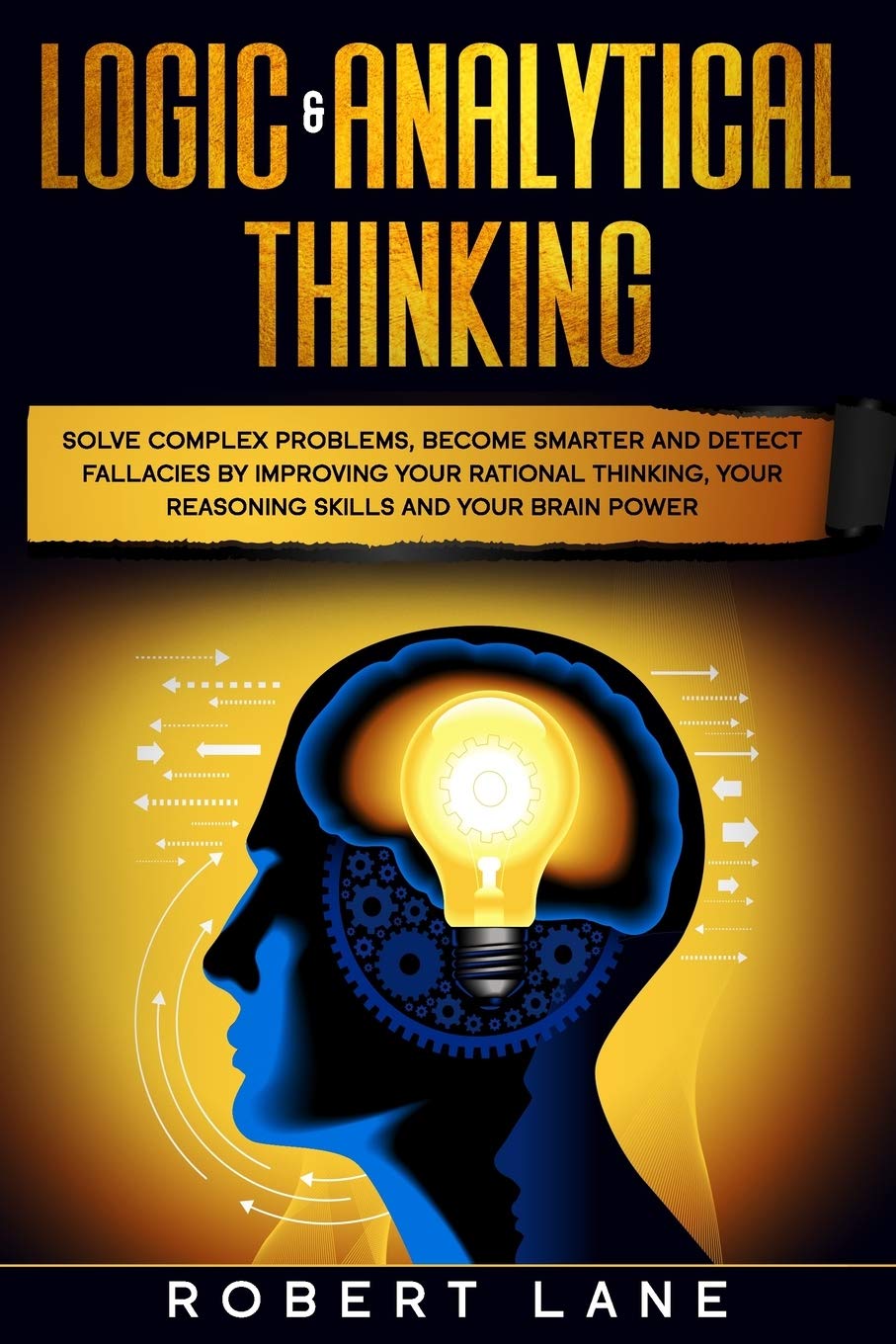
About Logic & Analytical Thinking by Robert Lane: A Practical Guide to Clearer Decisions
A strong opinion can sound like a strong argument. A confident speaker can make a weak claim seem true. And when you have to make a choice quickly, it is easy to accept the first answer that comes to mind. Logic & Analytical Thinking by Robert Lane is for readers who want to slow down, ask better questions, and think through problems with more care.
The book focuses on logical reasoning, analytical thinking, problem-solving, and spotting flaws in arguments. Its full title also points to improving rational thinking and reasoning skills. These ideas may sound formal, but they have a simple purpose: helping you look at what you know before you decide what to believe or do.
You do not need to be a scientist or a maths expert to be interested in clear thinking. You might be a student comparing two answers, a worker choosing between plans, or someone trying to understand a claim you saw online. In each case, a useful first step is the same: find out what the claim says, what evidence supports it, and what may be missing.
When a problem feels bigger than it is
Some problems are hard because they have many parts. Others feel hard because those parts are mixed together. You may have facts, guesses, advice, and feelings about the same issue. If you treat them all as equally reliable, the choice ahead can feel confusing.
Imagine that you are buying a laptop. One person says a model is “the best.” Another says it is a poor choice. An advert lists impressive features. Your own budget sets a limit. Before choosing, you need to know what “best” means for you. Is battery life most important? Do you need it for study, design work, or games? How much can you spend?
Analytical thinking starts by making the question clear. Then you can look at each piece of information and decide how much it helps. This does not promise a perfect answer. It gives you a more careful way to reach one.
That is the kind of reading this book invites. It asks you to take an interest in how you think, not only in the answer you reach. If you often find yourself saying, “That sounded right at the time,” its subject may feel familiar.
What this book is about
Logic & Analytical Thinking is a nonfiction guide by Robert Lane. It is presented as a book about improving reasoning, approaching complex problems, and detecting fallacies, which are mistakes in the way an argument is made. It also covers the broader aim of thinking more rationally when you assess information or make decisions.
A fallacy can be easy to miss. For example, someone may say a choice is good because many people have made it. Popularity tells you that a choice is common; it does not, by itself, tell you whether the choice meets your needs. Once you learn to look for gaps like this, you can ask a more useful follow-up question: What reasons support the claim?
The book’s subject is especially relevant when information comes from many places at once. A friend gives advice. A video offers a quick answer. A product page makes a promise. Each may contain something useful, but you still need to judge the reason behind it. Clear thinking helps you give a claim the attention it deserves without accepting it only because it sounds certain.
This is a book to read with your own questions in mind. You can connect its ideas to a decision you are facing, an argument you have heard, or a problem you want to break into smaller parts. Reading about reasoning is a start. The value comes from trying those habits in daily life.
Learn to ask one more question
Many poor decisions begin with a question that is too broad. “Is this a good course?” “Should I take this job?” “Who is right?” Each question may need several smaller questions before you can answer it well.
For a course, you may need to ask what it teaches, how much time it takes, what it costs, and whether it fits your goal. For a job, pay may matter, but so might travel time, the work itself, and what you can learn. Asking these smaller questions gives you something clear to examine.
Logical thinking also helps you notice when two people are answering different questions. One person may judge a phone by its camera, while another judges it by its battery. They can disagree without either person having checked what the other needs. When you define the problem first, the discussion becomes easier to follow.
This does not mean every choice needs hours of study. A small choice may need only a quick check. A costly or lasting choice deserves more care. The point is to match your effort to the decision instead of letting a strong first impression do all the work.
What you can take from the reading
Here are the main skills this book is intended to help readers explore:
- Clearer reasoning: Look at how a conclusion follows from the information given.
- Better questions: Define the problem before you look for an answer.
- Careful assessment of claims: Check what evidence is offered and what is left out.
- Awareness of fallacies: Notice common gaps or errors in arguments.
- A more structured approach to problems: Separate a large issue into smaller parts you can examine.
- More considered decisions: Pause and compare reasons before choosing a course of action.
These are useful skills because they travel with you. You can use them while reading a news story, planning a project, comparing products, or talking through a disagreement. The situation changes, but the habit of asking “How do we know?” remains useful.
You may also find that careful thinking changes the way you explain your own views. It is easier for someone else to understand you when you can say what you believe and why. If a reason is weak, you have a chance to improve it. If new information changes your mind, you can explain that too.
Useful at school, work, and home
A student can use analytical thinking while working on an essay. Before writing, they can decide what the main point is, find evidence for it, and check whether each example truly supports that point. This can make the writing clearer for the reader as well as the student.
At work, the same approach can help when a task goes wrong. It may be tempting to fix the first thing that looks broken. Looking at the steps in order can help you find where the problem began. Once you know that, you can choose a response that fits the cause.
At home, clear thinking can help with ordinary purchases. If two items have different prices and features, you can list what matters to you, compare them, and leave out features you will never use. The cheapest choice is not always the best value, and the most expensive choice is not always the best fit.
It can also help in conversation. When someone makes a claim you doubt, you do not have to start with an argument. You can ask where the information came from or what would change their view. The goal is to understand the claim well enough to assess it.
These examples are ways to apply the book’s topic, not promises that reading one book will solve every problem. Thinking well takes practice. A guide can give you ideas and language to work with; you still have to use them.
A good choice for a curious reader
This book may suit you if you enjoy asking why something works, want to make more careful decisions, or find yourself lost when several people give different answers. It may also suit a reader who is new to books about reasoning and wants an introduction to the subject.
You can read it with a pencil nearby and note questions that connect to your life. What kind of claim do you accept too quickly? When do you need more evidence? Is there a decision you keep putting off because you have not yet made the question clear? Those notes can make the reading more personal and useful.
If you are buying it as a gift, think of someone who likes learning practical ideas. A student, a new graduate, or a friend who enjoys discussing how people make choices may appreciate its subject. It is a book about a skill people can keep practising long after they finish reading.
The title mentions becoming smarter, but the most helpful goal is more specific: becoming more aware of your reasoning. Anyone can miss an important detail or make a quick assumption. Noticing that possibility is part of thinking with care.
A printed copy made for regular reading
Bookish Wonderland offers this printed book for readers who like to sit with an idea, turn back to an earlier page, and make time away from a screen. Its premium eye-soothing cream paper is chosen for comfortable reading. Crystal-clear print helps keep the words easy to see.
The book also has high-quality stitched and glue binding for longevity. That matters for a title you may want to return to as you practise its ideas. You can read a section, put the book aside, and pick it up again when a real question gives you a reason to revisit it.
A printed guide gives you room to read at your own pace. You can pause over an idea instead of rushing to the next one. If a point seems useful, try explaining it in your own words or applying it to a small decision. That simple pause may help you get more from the page.
Bookish Wonderland carries a large collection of premium, durable English books. If you are building a reading habit or choosing books for study and personal growth, Logic & Analytical Thinking can sit alongside other titles that help you learn new skills.
Before you place your order
If you are checking the Book price in Bangladesh for Logic & Analytical Thinking by Robert Lane, view the current price on this product page before placing your order. You can also check the available format and any delivery details shown at checkout.
Bookish Wonderland offers nationwide delivery across Bangladesh, including addresses inside and outside Dhaka. Cash on Delivery is available, and a fast or urgent delivery option is available in Dhaka. If you need the book by a particular day, contact the store to check the available delivery option before ordering.
Choosing a book about thinking is a practical step, but there is no need to wait until you face a major problem to read it. Small daily choices give you plenty of chances to practise: compare a claim with its evidence, ask what a word means, or check whether a conclusion follows from the facts.
Order Logic & Analytical Thinking by Robert Lane from Bookish Wonderland when you are ready to give those habits more attention. Read it slowly, test its ideas against real questions, and keep the methods that help you think more clearly.
If you require any customization or have any questions, please inbox us via FB or Insta.
| Primary Specification | |
| Author | Robert Lane |
| Genre | Self-Help, Critical Thinking, Logic, Analytical Thinking, Problem-Solving |
| ISBN-13/ISSN | 979-8626412444 |
| Publisher | Independently published |
| Publishing Date | 16 March 2020 |
| Language | English |
| Reading Age | 16+ years |
| Format | Printed book |
| Physical Specification & Quality | |
| Paper Quality | Premium eye-soothing cream paper |
| Binding Quality | High quality stitched and glue binding (for longevity) |
| Print Quality | Crystal-clear print |
| Pages | 194 pages |
| Country | USA |
| Logistics Information | |
| Weight | 213 gm |
| Length | 8.5 inches |
| Width | 5.6 inches |
| Height | 0.48 inch |