

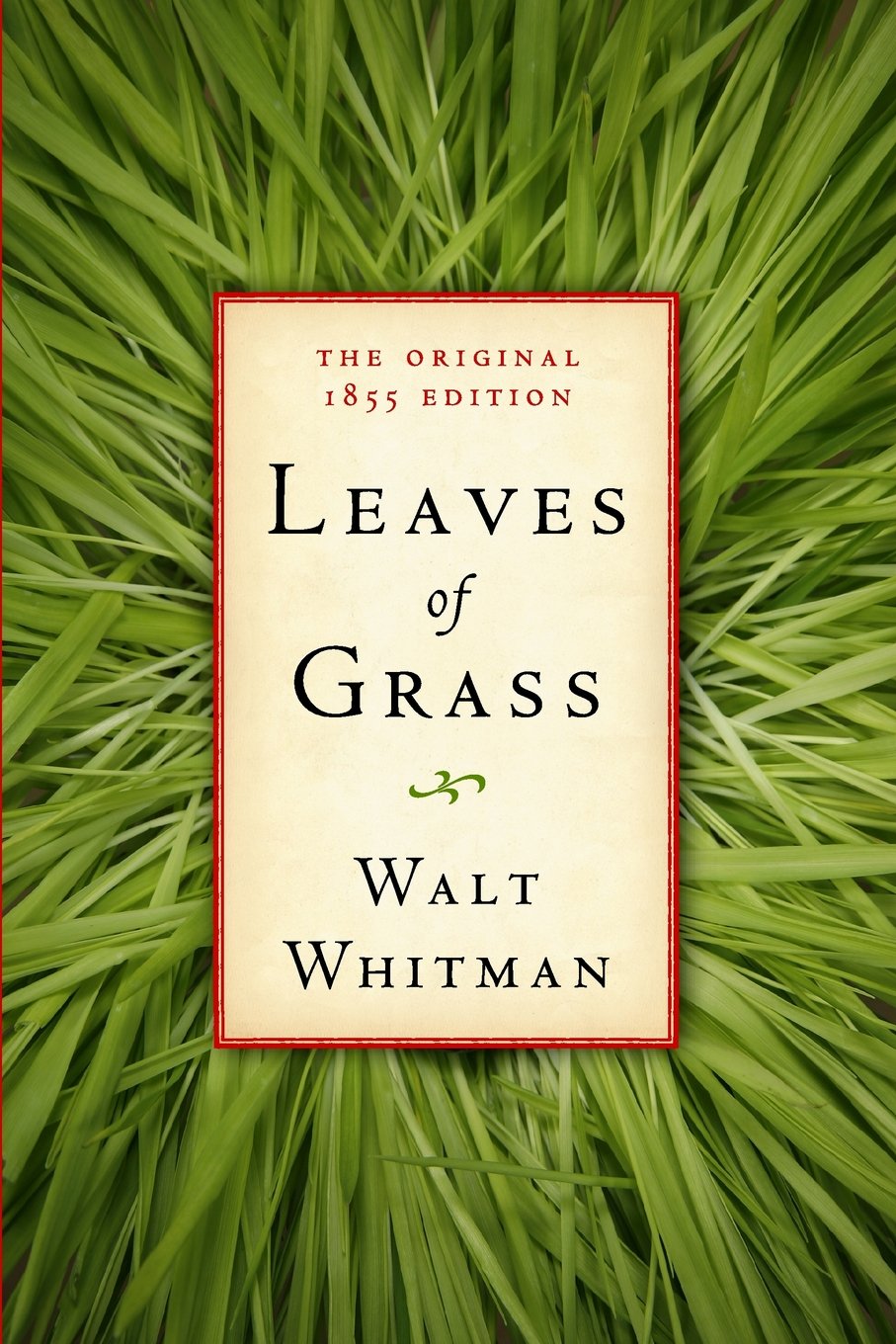
About Leaves of Grass by Walt Whitman – A Poetry Collection About Self, Nature, Democracy, the Body, Love, and American Life
Leaves of Grass by Walt Whitman is one of the most important poetry collections in American literature. Whitman first published the book himself in Brooklyn in 1855. That first edition contained only twelve poems and a long preface. He then spent the rest of his life revising, expanding, rearranging, and republishing the collection.
By the final 1891–1892 version, Leaves of Grass had grown into a large body of work containing hundreds of poems. Whitman treated the book almost like a living project. He added poems, changed titles, adjusted punctuation, moved groups of poems, and continued shaping the collection as he grew older.
The poems explore the self, the human body, nature, work, love, friendship, death, democracy, travel, war, spirituality, and the many kinds of people who make up a country. The style is direct, open, and very different from the strict rhyme and meter common in much nineteenth-century poetry.
Whitman Wanted a New Kind of American Poetry
Whitman believed American poetry should sound different from older European traditions.
He wanted a voice that could include workers, travelers, city streets, farms, rivers, bodies, politics, love, and ordinary speech.
Instead of relying on regular rhyme schemes, he often used long lines, repetition, lists, strong rhythms, and free verse.
This gave his poems a speaking quality.
Some lines feel like public speech. Others feel private and reflective. Many move quickly between the individual person and the larger world.
For readers used to short, tightly rhymed poems, Whitman can feel unusual at first.
The best way to approach him is often to read slowly and listen to the rhythm of the sentences rather than search for a traditional rhyme pattern.
Song of Myself Is the Central Poem
One of the best-known works in Leaves of Grass is Song of Myself.
The poem began in the 1855 edition without the title readers know today. Whitman revised and renamed it over time.
It is long, wide-ranging, and central to his idea of the self.
Whitman moves between his own body, other people, nature, work, death, spirituality, and the shared experience of being alive.
The “self” in the poem is not only one private individual.
It keeps expanding toward other people.
Whitman often suggests that the boundary between one person and another is less fixed than it seems.
This is one reason the poem continues to be studied in literature courses and read by people interested in identity, democracy, and free verse.
The Body Is Treated as Worthy of Poetry
Whitman writes about the human body with unusual openness for his time.
In poems such as I Sing the Body Electric, he treats the body and soul as closely connected rather than placing one above the other.
He writes about men and women, movement, touch, physical labor, health, desire, and the ordinary details of human form.
This direct treatment of the body made some nineteenth-century readers uncomfortable.
It was also part of Whitman’s larger argument that poetry should include real human experience rather than only polished or socially approved subjects.
Modern readers should know that some poems contain open discussion of sexuality and physical desire.
Nature Appears Everywhere
Grass, trees, birds, water, roads, stars, air, shorelines, and changing seasons appear across the collection.
Nature is not only decoration.
Whitman uses it to think about life, death, connection, growth, and time.
Grass becomes especially important.
It can be ordinary and everywhere, but it can also suggest equality because it grows across different places without caring about social rank.
The natural world also helps Whitman move between very small details and very large ideas.
A leaf, a bird, or a patch of grass can lead toward thoughts about the body, the nation, death, or the universe.
Democracy Is More Than a Political Word
Whitman’s idea of democracy is connected with the value of ordinary people.
He writes about workers, sailors, mothers, children, farmers, drivers, laborers, soldiers, and people moving through cities and roads.
He often tries to place different kinds of lives inside the same poem.
This does not mean his work answers every political problem fairly or perfectly.
Whitman was a nineteenth-century writer with views that changed over time and can be debated today.
However, Leaves of Grass repeatedly asks readers to notice people who might otherwise be ignored.
The collection tries to build a poetic voice large enough to include difference, variety, and shared human worth.
Love and Friendship Have Many Forms
Leaves of Grass contains poems about affection, companionship, desire, attraction, loyalty, and emotional closeness.
Some of Whitman’s most discussed poems appear in the Calamus cluster, which focuses strongly on bonds between men.
Scholars have long studied these poems in relation to sexuality, friendship, and Whitman’s personal life.
The collection also contains poems about women, family, strangers, crowds, and the feeling of connection between people who may never know one another personally.
Whitman often treats love as something that can widen a person’s awareness of the world rather than only as a private romance.
The Civil War Changed Whitman’s Poetry
The American Civil War had a major effect on Whitman.
He spent time in Washington, DC, visiting wounded soldiers in military hospitals and offering practical help, conversation, small gifts, and comfort.
His experiences during the war shaped Drum-Taps and later poems that became connected with Leaves of Grass.
These poems show a different side of his voice.
The energy of earlier poems is still present, but war brings pain, injury, death, grief, and national division much closer.
The Wound-Dresser looks directly at care for injured soldiers.
Whitman also wrote major poems after the assassination of Abraham Lincoln, including When Lilacs Last in the Dooryard Bloom’d and O Captain! My Captain!
Whitman Kept Revising the Book
Leaves of Grass is unusual because there is no single simple version that represents every stage of Whitman’s work.
The Library of Congress notes that the first 1855 edition had twelve poems.
Whitman continued producing revised versions throughout his life, with the final 1891–1892 form often called the deathbed edition.
He added poems, changed titles, revised lines and punctuation, reorganized clusters, and altered the physical design.
This means two books called Leaves of Grass can be quite different.
Some modern editions reproduce the original 1855 text. Others use the final version. Some combine several versions or add notes and introductions.
Customers should check the edition before buying if they need a particular text.
The 1855 Edition Is Important on Its Own
The first edition was self-published in Brooklyn in 1855.
The Library of Congress records it at ninety-five pages plus a portrait plate.
Whitman did not place his name on the title page. Instead, the book included a frontispiece image of him dressed more like a worker than a formal literary gentleman.
The first edition contained twelve untitled poems and a preface.
It was small compared with later versions, but it introduced the style and ideas that Whitman would develop for decades.
Some readers prefer this early version because it shows the original shape of the project before years of expansion and revision.
The Final Version Is Much Larger
By the end of Whitman’s life, Leaves of Grass had become a very different book.
The Library of Congress describes the final form as a collection of almost four hundred poems.
The Walt Whitman Archive explains that the 1891–1892 version used the established arrangement of the 1881 edition while adding later material and minor revisions.
Modern publishers often reproduce this final authorized form.
A current Vintage Classics paperback published in 2019 is 576 pages and reproduces the final version.
Other modern editions are much shorter or longer depending on whether they use the 1855 text, the final text, selected poems, annotations, or multiple versions.
About Walt Whitman
Walt Whitman was born on Long Island, New York, in 1819 and grew up mainly in Brooklyn.
He had limited formal schooling and worked as a printer, teacher, journalist, editor, and writer.
Before becoming known for poetry, he worked in newspapers and developed strong interests in politics, city life, public debate, and ordinary people.
He self-published Leaves of Grass when he was thirty-six.
During the Civil War, he spent years visiting wounded soldiers in hospitals around Washington.
After suffering a serious stroke in 1873, he eventually settled in Camden, New Jersey.
He died in 1892.
Whitman is now widely regarded as one of the most influential American poets.
Who Will Enjoy Leaves of Grass?
Leaves of Grass is a strong choice for readers who enjoy classic poetry, American literature, free verse, nature writing, philosophical reflection, social themes, and books about identity.
It can also be useful for students studying nineteenth-century literature, American poetry, democracy, the Civil War, sexuality, or the development of free verse.
The collection is not a novel, so readers should not expect one continuous plot.
It is better approached poem by poem.
Some pieces are short, while others are long and demanding.
Readers who enjoy language, rhythm, observation, and ideas may find more in the book each time they return to it.
A Helpful Way to Read the Collection
New readers do not need to understand every reference immediately. Start with a few major poems, read them aloud, and notice repeated images, sounds, and ideas. An edition with notes can help with historical references and older language. Returning to the same poem later often reveals connections missed during a careful first reading.
Book Quality at Bookish Wonderland
Bookish Wonderland offers this title with premium eye-soothing cream paper, crystal-clear printing, and high-quality stitched plus glue binding.
The cream paper supports comfortable reading, while clear printing helps preserve line breaks and makes longer poems easier to follow. Strong binding supports repeated reading, study, and shelf storage.
The copy is suitable for personal reading, gifting, classroom study, poetry collections, or readers building a shelf of American classics.
Why Order from Bookish Wonderland?
Bookish Wonderland delivers books across Bangladesh, including inside and outside Dhaka. Cash on Delivery is available nationwide.
Customers in Dhaka can also ask about fast or urgent delivery when available.
If you are checking Leaves of Grass by Walt Whitman Book price in Bangladesh, it is useful to compare the edition, completeness, page count, and physical quality along with the listed price.
Book customization is also available. For stock, edition, customization, or delivery questions, contact Bookish Wonderland through Facebook or Instagram.
Why Readers Continue to Choose Leaves of Grass
Leaves of Grass by Walt Whitman gives readers a large view of one poet’s changing thoughts about the self, the body, nature, democracy, work, love, war, death, and human connection.
It can be read slowly, one poem at a time, without finishing the whole collection in one sitting.
Whitman’s long lines and free verse changed the possibilities of American poetry, while his habit of revising the book shows how seriously he treated it as a lifelong project.
For readers who want a classic poetry collection that rewards rereading and offers many different themes, Leaves of Grass remains a useful place to begin with Whitman.
Order your copy from Bookish Wonderland for nationwide delivery and Cash on Delivery.
If you require customization or have questions, please inbox us via FB or Insta.
| Primary Specification | |
| Author | Walt Whitman |
| Narrator | Jack Chekijian |
| Genre | Poetry, American Poetry, Transcendentalist Poetry, Philosophical Poetry |
| ISBN-13/ISSN | 978-1684220588 |
| ISBN-10 | 1684220580 |
| Publisher | Martino Fine Books |
| Publishing Date | January 19, 2017 |
| Language | English |
| Reading Age | 16+ |
| Format | Printed Book |
| Physical Specification & Quality | |
| Paper Quality | Premium eye-soothing cream paper |
| Binding Quality | High quality stitched and glue binding (for longevity) |
| Print Quality | Crystal-clear print |
| Pages | 100 pages |
| Country | USA |
| Logistics Information | |
| Weight | 123 gm |
| Length | 8.5 inches |
| Width | 5.6 inches |
| Height | 0.25 inch |