

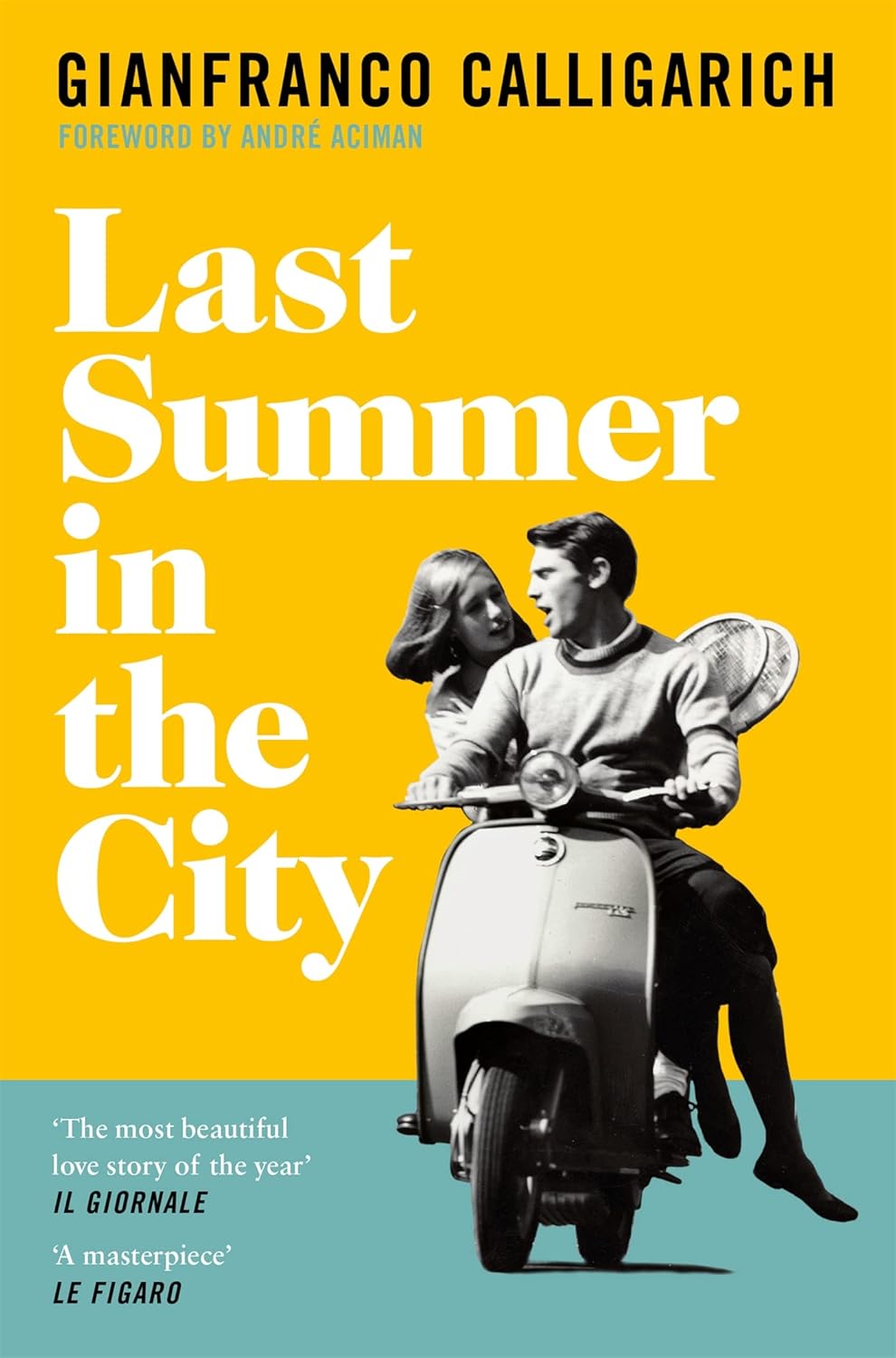
About Last Summer in the City by Gianfranco Calligarich – A Literary Novel of Love, Loneliness, and Rome in the 1960s
Last Summer in the City by Gianfranco Calligarich follows Leo Gazzara, a thirty-year-old journalist who has moved from Milan to Rome. He likes the sea, old books, and late nights. Steady work and marriage interest his friends more than him. Yet the freedom he wants often leaves him short of money and unsure where he belongs.
At a party, Leo meets Arianna. They spend the night driving through Rome in his worn Alfa Romeo, talking until morning and visiting the sea. Their connection becomes an uncertain relationship, marked by attraction, distance, and missed chances. Around them, friends pursue careers and conventional lives while Leo moves between temporary jobs, hotels, bars, and borrowed rooms. The novel follows the year he falls in love and begins to understand what his drifting life may cost him.
Meet Leo, a Man Who Avoids the Usual Plan
Leo is not interested in following the steps other people expect. He has left his family in Milan and made a new life in Rome, partly because the city is close to the sea he loves. He once had a position with a magazine, but it closed, leaving him searching for work.
He takes jobs without expecting lasting direction. He enjoys conversation and the company of friends, but he also steps away when relationships become difficult. His days feel pleasant until he needs money.
Calligarich lets readers see why Leo enjoys independence and why his refusal to commit creates problems. He can be observant and funny, but he is not always considerate. That makes him a complicated narrator rather than an example readers are expected to copy.
Arianna Brings Love and Uncertainty
Leo meets Arianna on his thirtieth birthday. Their first night together moves through the city, from conversation to breakfast and a drive toward the water. For someone who usually watches life from the sidelines, this encounter feels unusually important.
Arianna is also searching for something she cannot easily name. She draws Leo closer, then keeps her distance. Their relationship shifts between intimacy and separation, and neither person finds a simple way to say what they need.
Arianna cannot solve Leo's problems. She has her own uncertainty, and Leo's choices contribute to the difficulties between them. Readers who like emotionally complicated romances will find more here than a predictable story about two people meeting and settling down.
Rome Is More Than a Pretty Background
The novel takes place in Rome in the late 1960s. Calligarich describes its streets, squares, bars, parties, wealthy apartments, and summer heat with close attention. Leo moves through the city as both a resident and an outsider.
Beautiful surroundings do not always make him happy. A crowded bar can leave him feeling alone. A comfortable home can belong to someone who is losing money. A night of conversation can end without giving him a clearer future.
This is part of its appeal. Readers get a vivid sense of Rome without receiving a standard travel story. The city provides pleasure, shelter, temptation, and reminders that Leo has not found a secure place within it.
The Sea Offers a Different Kind of Freedom
Leo's love of the sea is established early. He remembers trips from childhood and explains that being near the coast helped draw him to Rome. The sea represents the open life he wants, away from family expectations and ordinary routines.
He and Arianna drive to the coast, and the beaches become part of their brief closeness. Yet a change of place cannot resolve the questions waiting for them back in the city.
The sea contrasts freedom and loss, summer pleasure and uncertainty. Readers who enjoy novels in which the setting carries emotional meaning may appreciate these scenes.
Friendship Has Its Own Complications
Leo moves among people who are often more financially secure than he is. Some offer hospitality or work. Others share his taste for long conversations and late nights. He depends on these relationships even when he claims to want an independent life.
His friend Graziano Castelvecchio is especially important. The two discuss their dissatisfaction and try writing a film script together. Their plans suggest that Leo might turn observation and talk into something lasting, but his habits make sustained effort difficult.
The novel shows that shared unhappiness does not guarantee change. Leo and Graziano understand parts of each other that others do not, yet both struggle with the lives they have made.
A Short Novel With a Reflective Voice
Leo tells the story while looking back on an important period of his life. His voice can be dry, witty, observant, and surprisingly tender. He notices how people talk, how rooms look, and how ordinary details reveal something about a person's position in the world.
The book is relatively short, but it is not built around constant twists. Conversations, memories, drives, parties, and brief meetings do much of the work. The tension comes from knowing that Leo is remembering a time that changed him.
This style rewards readers who like character, atmosphere, and careful sentences. Expect something quieter than a thriller or conventional romance.
Loneliness Can Exist in a Busy City
Leo rarely lacks places to go. He knows people who invite him out, lend him rooms, and introduce him to others. He moves through crowded streets and noisy social spaces.
Even so, he often feels separate from the people around him. Others seem to know what comes next, while he prefers to remain an observer. His connection with Arianna makes that distance more painful because he wants closeness without always knowing how to sustain it.
The book's view of loneliness is recognizable: someone can have company and still feel that their life has no firm center. Calligarich allows this feeling to emerge through Leo's daily habits rather than long explanations.
The Romance Is Not a Simple Escape
Leo and Arianna are drawn to each other, but attraction does not remove uncertainty. Their time together is full of conversation, brief happiness, and moments when one or both pull away.
The novel explores how people can want intimacy while fearing what it requires. Leo is used to keeping his options open. Arianna does not always make her feelings easy to read. Their relationship becomes another place where indecision has consequences.
Readers who prefer messy, believable emotions to a neatly arranged romance may connect with this approach. The story is interested in what love reveals about the characters, including weaknesses they would rather ignore.
Summer Gives the Story Its Shape
Heat, empty holiday homes, coastal drives, long evenings, and the rhythm of Rome all help create the book's seasonal atmosphere. Summer seems to offer time without limits, encouraging Leo to delay choices and enjoy whatever happens next.
But a season ends, and circumstances change. That contrast gives the title its meaning. A summer can feel endless while it is happening and surprisingly brief when remembered afterward.
The book is especially suited to readers who enjoy fiction about a particular place and time. Its picture of late-sixties Rome feels specific, but its questions about uncertainty and belonging remain familiar.
How the Novel Found New Readers
Calligarich's debut first appeared in Italy in 1973 under the title L'ultima estate in città. Writer Natalia Ginzburg helped bring attention to it. The novel later went out of print and was rediscovered, with new Italian editions appearing in 2010 and 2016.
Its English translation by Howard Curtis appeared in 2021. The English editions include a contribution by André Aciman, known for Call Me by Your Name. The American publisher notes that Vogue named the book among its best books of the year.
This history interests readers of translated classics. Its renewed attention shows how a book about a particular generation can find a later audience.
Publication and Edition Details
The original Italian novel was published by Garzanti in 1973. Picador released a UK hardcover on August 19, 2021, with 192 pages and ISBN 9781529042269. Its UK paperback appeared on July 7, 2022, also at 192 pages, with ISBN 9781529042290.
In the United States, Farrar, Straus and Giroux published an English edition in 2021. A Picador paperback followed on August 9, 2022, with 192 pages and ISBN 9781250849250. The English translator is Howard Curtis.
Covers, formats, and page counts may differ across editions. Readers looking for a particular cover or translation should check the listed copy before ordering.
About Gianfranco Calligarich
Gianfranco Calligarich was an Italian novelist, journalist, and screenwriter. He was born in Asmara in 1939, grew up in Milan, and later moved to Rome. He wrote for Italian television and founded Rome's Teatro XX Secolo in 1994.
Last Summer in the City was his debut novel and the first of his novels translated into English. His later works include La malinconia dei Crusich, which won the Viareggio-Rèpaci Prize. He died in 2024.
His experience moving to Rome as a young journalist gives useful background to the novel's setting, although Leo should not be treated as a direct account of the author's own life.
Who Will Enjoy This Book?
This novel is a good match for readers of translated Italian fiction, literary romance, character studies, city novels, and stories about uncertain adulthood. It also suits readers who enjoy reflective narrators, dry humor, and places that feel almost like characters.
Expect drinking, strained relationships, financial instability, grief, and emotionally difficult choices. The tone is sometimes funny but ultimately melancholy. It is intended for readers comfortable with an imperfect main character and an ending that does not promise an easy answer.
You do not need to know Italian history to follow the story. Interest in Rome, human relationships, and literary writing is enough. Its compact length also suits book clubs that want time to discuss loneliness, ambition, friendship, and difficult choices.
A Comfortable Reading Copy From Bookish Wonderland
Bookish Wonderland offers this title with premium eye-soothing cream paper, crystal-clear printing, and high-quality stitched plus glue binding. The clear text and comfortable pages suit a novel that rewards attention to small observations. Durable binding helps keep the copy together through rereading and shelf storage.
It makes a thoughtful gift for readers of Italian literature, a suitable choice for book clubs, or an addition to a collection of translated fiction.
Ordering and Delivery in Bangladesh
Bookish Wonderland delivers inside and outside Dhaka, with nationwide delivery and Cash on Delivery available across Bangladesh. Customers in Dhaka can ask about fast or urgent delivery options when available.
If you are comparing Last Summer in the City by Gianfranco Calligarich Book price in Bangladesh, check the listed format, edition, and physical quality as well as the price. Book customization is also available. Contact Bookish Wonderland through Facebook or Instagram for questions about stock, editions, delivery, or customization.
Bring Rome's Last Summer to Your Bookshelf
Last Summer in the City follows a man who wants to stay free but discovers that avoiding decisions has consequences. Leo's relationship with Arianna, friendships, temporary jobs, and long nights in Rome create a portrait of love and loneliness without pretending that either has a simple solution.
Choose it if you want a short literary novel with memorable city scenes, a reflective voice, and complicated characters. Order your copy from Bookish Wonderland for nationwide delivery and Cash on Delivery.
For customization or any questions, message us on Facebook or Instagram.
| Primary Specification | |
| Author | Gianfranco Calligarich |
| Translator | Howard Curtis |
| Narrator | Mark Meadows |
| Editor | Janet Evans-Scanlon |
| Genre | Literary Fiction, Romance, Psychological Fiction |
| ISBN-13/ISSN | 978-1250849250 |
| ISBN-10 | 125084925X |
| Publisher | Picador Paper |
| Publishing Date | August 9, 2022 |
| Language | English |
| Reading Age | 18+ |
| Format | Printed Book |
| Physical Specification & Quality | |
| Paper Quality | Premium eye-soothing cream paper |
| Binding Quality | High quality stitched and glue binding (for longevity) |
| Print Quality | Crystal-clear print |
| Pages | 192 pages |
| Country | Italy |
| Logistics Information | |
| Weight | 214 gm |
| Length | 8.5 inches |
| Width | 5.6 inches |
| Height | 0.5 inch |