

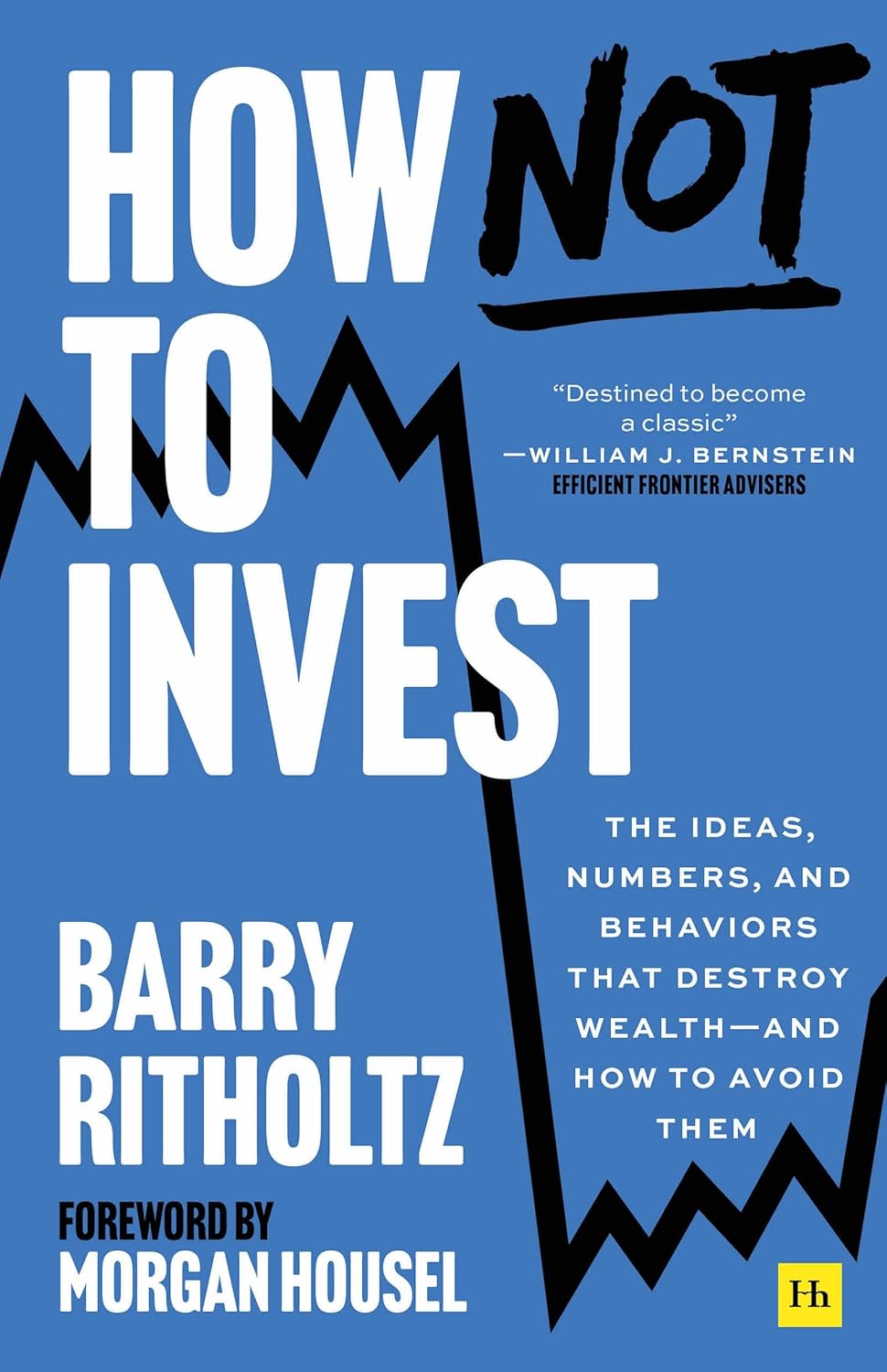
About How Not to Invest by Barry Ritholtz – A Clear Guide to Avoiding Costly Money Mistakes
How Not to Invest by Barry Ritholtz is a practical guide to one of the most important parts of investing: learning what not to do. Many books focus on finding winning stocks or making bigger returns. This book takes a different path. Ritholtz explains that investors can often improve results by making fewer bad choices. Fear, excitement, weak information, and poor habits can turn small errors into large losses. The book helps readers spot these traps and build a clearer, calmer way to handle money.
Why Smart People Still Make Bad Investment Choices
Investing looks simple from a distance. Buy a good asset, hold it, and let it grow. In real life, emotions and noise make things much harder. People panic when prices fall. They become too confident when prices rise. They follow hot tips, trust weak predictions, focus too much on short-term news, or believe that one lucky win proves they have special skill. These mistakes can slowly hurt a portfolio.
How Not to Invest helps readers understand why this happens. Instead of treating investors as perfectly logical people, Barry Ritholtz looks at the habits and mental shortcuts that often lead to poor decisions. He shows how people can get fooled by stories, numbers, forecasts, and their own confidence. The lesson is simple: you do not need to be perfect. You need a process that protects you from common errors.
A Book Built Around Avoiding Unforced Errors
The main idea of the book is easy to understand: losing less through avoidable mistakes can matter more than constantly trying to find huge wins. That makes How Not to Invest different from books that promise secret formulas or quick wealth. Ritholtz focuses on the errors that investors repeatedly make and explains how to reduce them.
The book looks at bad ideas, bad numbers, and bad behavior. Bad ideas can include popular beliefs that sound smart but do not hold up well. Bad numbers can include data that is misunderstood, used without context, or treated as more certain than it really is. Bad behavior includes emotional decisions, overconfidence, panic, chasing performance, and other actions that can weaken a long-term plan.
The result is a useful framework. Readers can ask three simple questions before making a decision: Is the idea sound? Are the numbers being used correctly? Am I reacting emotionally? Those questions can help slow down poor choices and make investing more disciplined.
What You Will Learn from How Not to Invest
This is not a book that asks readers to memorize difficult equations. Its value comes from helping people think more clearly. Barry Ritholtz uses real-world stories, market lessons, examples, and practical ideas to show how investment mistakes happen.
Readers can learn why predictions are often less reliable than they look, why confidence can become dangerous, why short-term market moves can distract from long-term goals, and why simple systems can be stronger than constant action. The book also encourages readers to question financial media, exciting stories, market experts, and any claim that sounds too certain.
Another important lesson is that being wrong is normal. Even experienced investors make mistakes. The goal is not to remove every error forever, but to make fewer mistakes and keep each one from becoming too expensive. This replaces the pressure to always be right with a more useful goal: build a process that is hard to damage.
Why This Approach Can Be More Useful Than Chasing the Next Big Winner
Many people enter investing with the wrong question. They ask, “What should I buy now?” or “What will go up next?” Those questions can lead to constant searching, fast trading, and emotional choices. How Not to Invest asks readers to focus first on the things that can destroy wealth.
That shift is useful because avoiding serious mistakes can protect years of progress. One poor decision made with too much money, too much debt, too much confidence, or too little research can hurt far more than several small good decisions can help. Ritholtz encourages readers to create a system that reduces these risks.
Clear Lessons for New Investors and Experienced Readers
A new investor can use this book to understand common traps before falling into them. It can help beginners learn that investing is not only about choosing assets. It is also about controlling behavior, managing risk, understanding uncertainty, and knowing when not to act.
More experienced investors may see familiar mistakes in a new way. They may recognize moments when confidence became too strong, when recent performance looked more important than it should, or when a convincing story replaced careful analysis. Because the book studies mistakes instead of only success stories, it can be useful at many levels of experience.
The writing makes market ideas easier to follow. Readers do not need to be traders, economists, or finance students. The main ideas are about judgment, habits, and decision-making, making the book useful for people who want to be more careful with money without turning investing into a full-time job.
What Makes the Book Practical
The strength of How Not to Invest is that its lessons can be used before, during, and after an investment decision. Before buying, a reader can ask whether the idea is based on facts or excitement. During a market move, the reader can check whether fear or greed is taking control. After a decision, the reader can review what went right or wrong without pretending that every result was caused by skill.
This kind of thinking can help investors build rules. A rule might limit how much money goes into one idea. Another might require time before acting on a hot tip. A reader may also decide to ignore short-term predictions, review a portfolio less often, or separate useful data from noise.
The book does not make investing risk-free. No book can do that. It helps readers improve how they make choices, with the realistic goal of fewer costly mistakes and a calmer relationship with markets.
Features Readers May Value
-
A clear focus on the mistakes that can damage long-term wealth
-
Simple lessons about bad ideas, weak numbers, and harmful behavior
-
Real-world examples that make investing errors easier to understand
-
Useful thinking tools for beginners and experienced investors
-
Strong focus on risk, judgment, discipline, and decision-making
-
Practical ideas that can be applied to everyday investment choices
-
Easy-to-follow explanations without depending on complex formulas
-
A useful framework for questioning predictions, trends, and financial noise
Benefits of Reading This Book
Reading How Not to Invest can help you become more careful about what influences your money decisions. You may become better at noticing when fear is pushing you to sell, when excitement is pushing you to buy, or when a confident expert is making a claim that has little support. You may also learn to slow down and ask better questions before changing your plan.
The book can also help reduce unnecessary activity. Investors often feel that they must always do something. They buy, sell, switch funds, follow news, and change plans because being active feels productive. Ritholtz shows why doing less can sometimes be the smarter choice. A clear plan, good diversification, patience, and fewer emotional moves can be more useful than constant action.
A Useful Read for Different Types of Investors
How Not to Invest by Barry Ritholtz can suit several kinds of readers. A beginner can use it as a warning guide before making common mistakes. A long-term investor can use it to review habits and strengthen discipline. A business student can use it to understand how behavior affects financial decisions. A finance professional may enjoy the market stories and the focus on investor psychology.
The book is especially useful for people who want a practical investing mindset instead of a list of “hot” stocks. It does not depend on one market cycle or one trend. The main lessons are about how people think and behave, which can matter in both calm and difficult markets.
A Premium Reading Copy from Bookish Wonderland
At Bookish Wonderland, this edition is prepared for readers who want a comfortable and durable physical book. The pages use premium eye-soothing cream paper, which is gentle on the eyes during longer reading sessions. The text is produced with crystal-clear print so charts, examples, and normal paragraphs stay easy to read.
The binding uses high-quality stitched and glue construction for better longevity. This helps the book stay firm during repeated use, which is useful for a finance title that readers may return to for notes, review, or reference. The book is made for regular reading rather than one-time use.
Bookish Wonderland also offers a large collection of premium and durable English books, with nationwide delivery across Bangladesh, delivery inside and outside Dhaka, Cash on Delivery, and fast or urgent delivery options in Dhaka.
When This Book Can Be Most Useful
You do not need to wait until you make a large investment mistake to read this book. It can be useful before starting an investment plan, while building a portfolio, after a market loss, or when you feel confused by too many opinions.
It may be especially helpful when markets are moving fast. During those times, people often react to headlines instead of plans. Reading about common errors can remind you that a strong process matters more than one day of market movement.
The book can also work as a review tool. Read a section, think about past decisions, and ask whether you made the same mistake. This turns the book into a way to check your own investing behavior.
Why the Book Stands Out
There are many books that teach readers what to buy, how to trade, or how to beat a benchmark. How Not to Invest stands out because it starts with defense. It asks what can go wrong and how you can protect yourself from your own weak decisions.
Barry Ritholtz also brings long experience in markets, financial writing, and wealth management to the topic. The book uses that experience to explain how mistakes appear in real life, not only in theory. Readers get a guide that is less about being clever and more about being careful.
How Not to Invest by Barry Ritholtz Price in Bangladesh
If you are looking for How Not to Invest by Barry Ritholtz Book price in Bangladesh, Bookish Wonderland offers a convenient way to order the printed book with home delivery. You can choose Cash on Delivery and receive the book inside or outside Dhaka. Fast or urgent delivery is also available in Dhaka when you need your order sooner.
For readers who want to improve their financial thinking, this book can be a useful addition to a personal finance or investing collection. It is designed to be read, marked, reviewed, and returned to whenever market noise makes clear thinking difficult.
A Better Investing Habit Can Start with One Better Question
The best reason to read How Not to Invest is not to discover a magic investment. It is to become harder to fool, harder to panic, and less likely to damage your own plan. The book encourages readers to question ideas, check numbers, understand behavior, and build rules that make bad decisions less likely.
If you want a finance book that focuses on avoiding costly mistakes instead of selling dreams of easy wealth, this is a strong choice. It can help you think more clearly about risk, uncertainty, market noise, and your own habits.
Order How Not to Invest by Barry Ritholtz from Bookish Wonderland and add a practical guide to smarter, calmer investing to your reading list. Get your copy today with nationwide delivery and Cash on Delivery available.
If you require any customization or have any questions, please inbox us via FB or Insta.
| Primary Specification | |
| Author | Barry Ritholtz |
| Narrator | Barry Ritholtz, Nathan Adams Stark |
| Genre | Business & Economics, Investing, Personal Finance, Investment Strategy |
| ISBN-13/ISSN | 978-1804093856 |
| ISBN-10 | 1804093858 |
| Publisher | Harriman House |
| Publishing Date | May 5, 2026 |
| Language | English |
| Reading Age | 18 years and up |
| Format | Printed book |
| Physical Specification & Quality | |
| Paper Quality | Premium eye-soothing cream paper |
| Binding Quality | High quality stitched and glue binding (for longevity) |
| Print Quality | Crystal-clear print |
| Pages | 480 pages |
| Country | USA |
| Logistics Information | |
| Weight | 502 gm |
| Length | 8.5 inches |
| Width | 5.6 inches |
| Height | 1.35 inch |