Skip to product information
1 of 1

Bookish Wonderland

Aristotle's Nicomachean Ethics by Aristotle

Aristotle's Nicomachean Ethics by Aristotle

Regular price Tk 453.00 BDT
Regular price Sale price Tk 453.00 BDT
Sale Sold out
Book cover type
Quantity

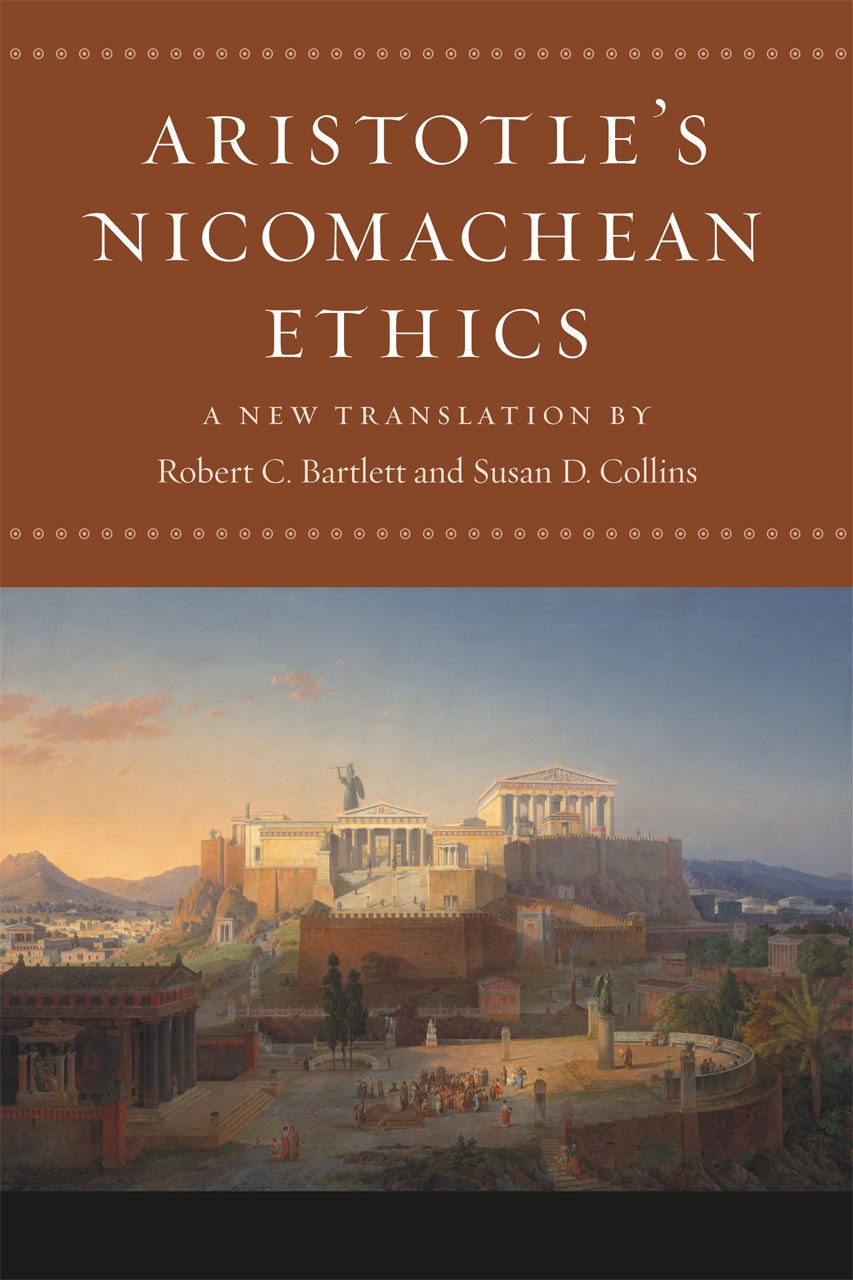
Aristotle’s Nicomachean Ethics explores what it means to live well and build good character. It presents happiness as the main goal of human life and explains how moral virtue grows through repeated actions and habits. Aristotle also shows why practical wisdom matters when choosing how to act in different situations. This English translation by Robert C. Bartlett and Susan D. Collins aims to preserve the meaning and careful wording of the original while making the text clear for readers. The edition includes detailed notes, a glossary, an introduction, and an interpretive essay. These additions explain key terms, outline major arguments, and explore how Aristotle’s views on ethics connect with his political thought. Read across many centuries, cultures, and religious traditions, this work continues to invite thoughtful discussion about happiness, responsibility, and human purpose. It offers students and curious readers a guide to understanding Aristotle’s ideas and considering their meaning in life. Read More

View full details

About Aristotle's Nicomachean Ethics by Aristotle: Explore Happiness, Good Habits, and a Meaningful Life

What makes a life good? Is it money, praise, pleasure, or the way we treat people? Aristotle's Nicomachean Ethics by Aristotle asks questions that still matter in daily life. It looks at happiness, character, friendship, and the choices that shape who we become.

Available from Bookish Wonderland, this classic offers a thoughtful place to begin exploring moral philosophy. You do not need to agree with every idea to gain something from it. The value lies in slowing down, following the reasons, and asking what a good life means to you.

Look Beyond Quick Advice

It is easy to hear advice such as be kind, stay strong, or choose wisely. It is harder to know what those words mean when a real choice is difficult. Should you speak up? How much should you give? When does confidence become carelessness?

Aristotle offers a way to examine these questions through character and judgement. His aim is practical: understanding goodness should help us act well. For readers tired of short slogans, this book offers arguments to examine and ideas to test against experience.

Happiness Means More Than Feeling Good

A central idea is eudaimonia, often translated as happiness or flourishing. In simple terms, it concerns living well across a whole life. A pleasant afternoon may be welcome, but it cannot by itself show whether someone is living well.

Aristotle links this fuller happiness to activity guided by reason and virtue. He also recognises that outside conditions and good fortune matter. This gives readers a richer question than whether they feel happy today: are their actions helping them build a life they have reason to value?

Good Character Grows Through Practice

Knowing that honesty matters is different from choosing to be honest when lying seems easier. Aristotle explores that gap between knowing and doing. He explains that moral character develops through repeated actions, much as a skill improves through practice.

This idea invites you to notice your everyday habits. How do you respond when annoyed? Do you keep small promises? What do you do when nobody is watching? These modern examples make the discussion easier to approach. The book encourages attention to patterns of action, rather than judging character by one good moment.

Finding the Right Response

Aristotle often describes virtue as a mean between too much and too little. Courage, for example, differs from both running from every danger and rushing into danger without thought. The good response depends on the situation.

This does not mean always choosing a halfway point or accepting every compromise. Aristotle also says some actions are wrong in themselves. His discussion asks us to consider the right action, at the right time, for the right reason. It gives readers a useful starting point for thinking about balance without turning it into a fixed rule.

Why Friendship Matters

The book gives serious attention to friendship. Aristotle distinguishes friendships based on usefulness, shared pleasure, and appreciation of another person's good character. He considers what people seek from these bonds and why some relationships last.

For a modern reader, this opens questions about care and trust. Do we value a friend only for help or entertainment? Can we wish someone well for their own sake? You may find these pages especially rewarding if you enjoy reading that connects large ideas with familiar human experiences.

Think About Choice and Responsibility

Aristotle explores actions we choose, actions shaped by force or ignorance, and the part that careful thought plays in deciding what to do. He also examines the familiar problem of acting against our better judgement.

These discussions can prompt reflection on excuses, pressure, and personal responsibility. They do not supply an easy answer to every case. Instead, they invite you to separate different situations and explain your reasons clearly. That makes the book worth considering for readers who enjoy thoughtful debate about human behaviour.

More Ideas to Explore

Justice, pleasure, and practical wisdom also have important places in the work. Practical wisdom concerns judging how to act well in particular situations. It involves experience and attention to real circumstances, alongside sound reasoning.

Later, Aristotle considers the value of contemplation: the active life of thought and understanding. Together, these subjects give the work a wider scope than a simple guide to manners. It asks what we should seek, how we should live with others, and which activities deserve a central place in our lives.

Who Will Enjoy Reading It?

This book can suit philosophy students, curious adults, teachers, and readers interested in ethics. Someone studying business or leadership may also find useful questions about character and responsibility, while remembering that this is ancient philosophy rather than a modern management manual.

Beginners can approach it slowly, with a notebook nearby. Read a short passage, put its main point into your own words, and think of an example. The language and difficulty depend partly on the translation. If you need a specific translator for a course, confirm the available edition before ordering.

For students, it can be useful to separate three things in your notes: Aristotle's claim, the reason he gives, and your own response. That keeps disagreement focused and helps you see where an argument succeeds or needs more support. For personal reading, you might choose one habit to observe during the week. Neither approach requires treating the author as always right. Careful questioning is part of the value of reading philosophy, and it can make challenging pages feel more rewarding too.

A Premium Copy for Careful Reading

Bookish Wonderland offers practical features for readers who want a pleasant printed copy.

Premium cream paper: The soft page colour suits readers who prefer a warmer background to bright white pages.

Crystal-clear print: Sharp text helps you follow each line while studying an argument closely.

High quality stitched and glue binding: This construction helps keep the pages together through regular use and careful rereading.

These qualities support the physical reading experience. To help your copy last, use a bookmark, keep it dry, and avoid forcing the spine flat. Small care habits matter when a book is likely to receive repeated attention.

Read, Discuss, and Return to It

Use this book for personal reading, a study group, or discussion with a friend. Choose one question each session, such as what makes an action fair. Compare your answers with the argument in the text.

You can also return to a passage after gaining new experience. A discussion of friendship may feel different after a relationship changes. Reading this way lets an old work become part of an ongoing conversation, while leaving room to question its claims and recognise its ancient social setting.

Check the Price and Delivery Options

Book price in Bangladesh can vary by edition, so check the displayed price and confirm any delivery charge before ordering. Ask about the available copy if its cover, translation, or study notes matter to you.

Bookish Wonderland offers nationwide delivery, Cash on Delivery, and delivery inside and outside Dhaka. A fast or urgent delivery option is available in Dhaka; confirm arrangements for your address when timing matters.

Whether you are buying for study or personal interest, clear edition details help you choose confidently from our English book collection.

Start Exploring a Good Life

Order Aristotle's Nicomachean Ethics by Aristotle from Bookish Wonderland today. Explore questions about happiness, friendship, and the person you want to become. For order details or customisation requests, inbox us on Facebook or Instagram.


If you require any customization or have any questions, please inbox us via FB or Insta.

Primary Specification
AuthorAristotle
TranslatorRobert C. Bartlett, Susan D. Collins
Narrator Peter Coates
GenrePhilosophy, Ethics, Moral Philosophy
ISBN-13/ISSN978-0226026756
ISBN-100226026752
PublisherUniversity of Chicago Press
Publishing DateApril 23, 2012
LanguageEnglish
Reading Age13+ years
FormatPrinted book
Physical Specification & Quality
Paper QualityPremium eye-soothing cream paper
Binding Quality High quality stitched and glue binding (for longevity)
Print QualityCrystal-clear print
Pages368 pages
CountryGreece
Logistics Information
Weight375g
Length8.5 inches
Width5.6 inches
Height1 inches
What is Aristotle’s Nicomachean Ethics about?

Aristotle’s Nicomachean Ethics examines how people can live well and develop good character. It discusses subjects such as courage, fairness, friendship, pleasure, choice, and responsibility. Rather than simply giving rules to follow, Aristotle asks readers to think about why an action is good and what kind of person performs it. His approach connects thoughtful judgement with everyday behaviour. This makes the book relevant to readers interested in moral philosophy, human relationships, and personal values. It is a work of philosophical reasoning, so expect arguments to consider rather than a story with characters and a plot.

How many books are in the Nicomachean Ethics series by Aristotle, and what are they?

Aristotle’s Nicomachean Ethics is a standalone philosophical work, not a numbered series. It contains ten internal sections traditionally called “books,” but these belong to the same work and are not ten separate sequels. You therefore do not need to buy a series or follow a list of related titles to begin reading it. The word “book” can cause confusion when a course asks you to study Book I or Book II: those references mean sections within Nicomachean Ethics. There is no numbered series list to provide for this title.

Is Nicomachean Ethics suitable for beginners in philosophy?

Beginners can read Nicomachean Ethics, although some passages need time and a second reading. Public reader discussions often raise questions about difficult wording, translation choices, and whether a study guide is necessary. A practical way to start is to read a short section, identify its main question, and write the argument in your own words. Keep track of unfamiliar terms instead of trying to remember everything immediately. You do not need to understand every detail on your first attempt. Readers willing to pause and think are likely to find this approach more useful than rushing to finish.

What does the Robert C. Bartlett and Susan D. Collins translation include?

The Robert C. Bartlett and Susan D. Collins edition provides an English translation together with an introduction, detailed notes, a glossary, and a substantial interpretive essay. These additions help explain important terms, provide context, and explore the main arguments. The essay also considers how the work connects with Aristotle’s political thought. This makes the edition useful for readers who want support alongside the text rather than a translation alone. If you are buying for a class, match the translators’ names with your reading list, since different English editions may use different words for the same Greek concept.

What does Aristotle mean by happiness in Nicomachean Ethics?

Aristotle’s idea of happiness concerns living well across a whole life, rather than simply feeling cheerful or enjoying a pleasant moment. The Greek term is eudaimonia, which is also often explained as flourishing. He connects it with worthwhile activity, reason, and good character, while recognising that circumstances and good fortune also affect human life. For readers, this creates a useful distinction between immediate pleasure and a life that goes well overall. The book asks what deserves our time and effort, encouraging us to examine our aims rather than assuming that wealth, praise, or comfort alone will be enough.

Does Aristotle’s idea of balance mean always choosing the middle option?

No. Aristotle’s discussion of the “mean” does not mean that every good choice sits halfway between two options. He explains that many virtues involve responding appropriately between forms of excess and deficiency. Courage, for example, differs from both excessive fear and careless risk taking. What counts as the right response depends on the person, circumstances, purpose, and sound judgement. He also recognises that some actions are wrong in themselves, so there is no good amount of them. This distinction helps readers avoid reducing his ethics to the simple but misleading rule of doing everything in moderation.

Is Aristotle’s Nicomachean Ethics from Bookish Wonderland a premium edition?
Yes. Bookish Wonderland offers this title as a premium reading copy, with the focus on its paper, printing, and binding quality. Here, “premium” describes the physical reading experience; it should not be taken to mean a signed copy, limited release, or special collector’s edition. Those features would need to be stated separately. If you have a particular cover or edition in mind, ask about the available copy before ordering. This helps you choose a book that matches your expectations, whether you plan to read it personally, use it for study, or give it as a gift.
What are the paper and print quality like?
The book features premium eye-soothing cream paper and crystal-clear print. The cream colour gives the pages a softer appearance than bright white paper, while sharp, clean text makes individual words easy to distinguish. These qualities are useful in a philosophy book, where readers often return to a sentence several times to understand its meaning. Clear printing helps you concentrate on the argument without unclear letters getting in the way. For comfortable reading, use suitable lighting and a distance that works for you. Paper preference is personal, but readers who enjoy cream pages may particularly appreciate this finish.
How durable is the binding, and how can I help the book last?

Bookish Wonderland uses high quality stitched and glue binding to help keep the pages secure through regular reading and repeated study. This matters for a title you may open many times while checking an argument or returning to a favourite section. No binding is damage-proof, and its lifespan depends partly on handling and storage. Keep your copy away from water and damp places, avoid pulling the covers backwards, and use a bookmark instead of folding page corners. Support the book comfortably while reading rather than forcing the spine flat. These simple habits help preserve its condition over time.

Can I get this book delivered across Bangladesh with Cash on Delivery?

Yes. Bookish Wonderland offers nationwide delivery across Bangladesh, including addresses inside and outside Dhaka, with Cash on Delivery available. A fast or urgent delivery option is also available in Dhaka. If you need the book before a class, examination, or gift date, contact the shop to confirm arrangements for your address before ordering. Delivery timing and charges should be checked for your particular order rather than assumed from another customer’s experience. Providing your full address and a working phone number helps make the delivery process easier and allows any location questions to be resolved.

How can I check the price of Aristotle’s Nicomachean Ethics in Bangladesh?

Check the current price displayed on the Bookish Wonderland product page, then confirm the delivery charge to understand the total amount payable. If you are comparing this title with another listing, check the translation and edition details as well as the price. Different versions may include different introductions, notes, or other study material, so matching the title alone may not identify the same edition. No fixed price is stated here because an amount has not been supplied. For clarification about the available copy or order total, contact Bookish Wonderland before confirming your purchase.

Why choose Bookish Wonderland for Aristotle’s Nicomachean Ethics?

Bookish Wonderland is a useful choice for readers who want to purchase English books through a Bangladesh-focused shop with a large collection. You can ask about the available copy before buying and check whether it fits your personal reading plans, course needs, or gift preferences. For this title, choosing the right translation matters as much as choosing the book itself. Our aim is to help you make that choice with clear product information. If anything about the listing needs clarification, inbox us on Facebook or Instagram so you can order with a better understanding of what you are buying.